

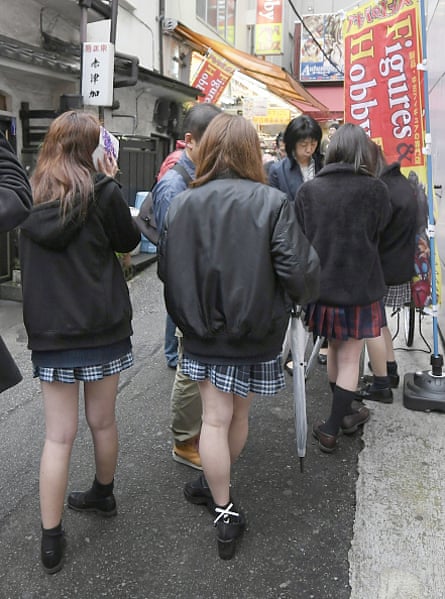
In parts of Tokyo, particularly around Akihabara, areas informally referred to as “JK Alley” have drawn increasing attention for their association with the controversial “JK business.”
The term “JK” stands for joshi kōsei, meaning female high school students, and refers to a subculture where teenage girls, often dressed in school uniforms, offer paid companionship to adult men.
Typically, these services involve brief interactions such as walking together, chatting, or taking photos. Promoted as harmless social encounters, these exchanges usually last 30 to 40 minutes and are arranged on the street or through establishments commonly known as “JK cafés.”
However, critics argue that the reality behind these services is far more troubling. While marketed as innocent, the “JK business” has been widely linked to enjo kōsai, or “compensated dating,” a practice that has long raised concerns about the exploitation of minors in Japan.
Human rights organizations, including groups like Human Rights Watch, have warned that such environments can create pathways for abuse.
They argue that even when activities appear non-sexual, they may expose underage girls to grooming, coercion, or pressure to engage in more explicit acts. Advocacy groups stress that economic vulnerability and social pressures can push teenagers into these arrangements, blurring the line between choice and exploitation.

Japanese authorities have taken steps in recent years to regulate the industry, particularly in Tokyo, where police have cracked down on street solicitation and introduced stricter oversight of businesses targeting minors.