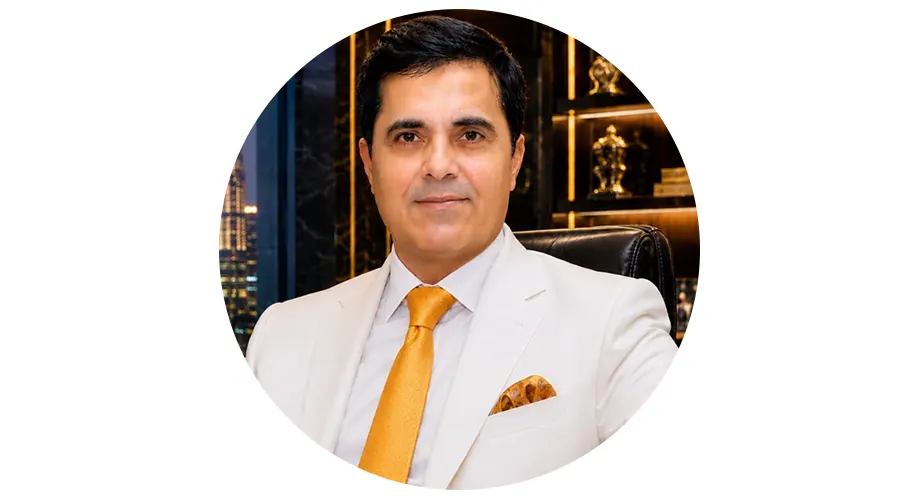


Yesterday, I had the opportunity to visit an outstanding institution known as the Sindh Police Security and Emergency Services Division, the creation of which is credited to a visionary personality we know as Dr. Maqsood Ahmed, who laid the foundation of the Special Security Unit (SSU) and transmuted it into a division aligned with the requirements of the modern era, which today comprises six subsidiary units.
Although there are many distinguished and prestigious institutions in this country that are rendering excellent services in their respective fields, this is one institution that I can very easily compare with the institutions of the 11 countries where I had the opportunity to serve, either while working with the United Nations or while serving Pakistan as an Ambassador. I can say with unwavering confidence and full responsibility that I have not encountered an institution in those countries at this level, of this caliber, and aligned with the requirements of the modern era, possessing the capability to deliver such high-quality and valuable services in every respect. This is because the Security and Emergency Services Division is counted among the most formidable operational forces of Karachi within the modern and specialized units of the Sindh Police. Its primary objective is to deal with terrorism, emergency situations, VIP security, the protection of sensitive installations, and the provision of immediate emergency assistance to citizens by the police. This division was inaugurated in November 2019 through an official notification by the Government of Sindh to bring various security and emergency units under a single command in order to augment their performance. The institution functions under the administrative and operational control of the Additional Inspector General of Police Karachi, with its headquarters located in Karachi.
Speaking of modern facilities, the various units of the Security and Emergency Services Division have been furnished with armored vehicles, modern assault rifles, sniper rifles, night vision equipment, bulletproof jackets, helmets, wireless communication systems, state-of-the-art command and control systems, and high-speed response vehicles so that they can effectively discharge the duties assigned to them by the higher authorities.
As far as deployments are concerned, the officers and specially trained personnel working under this division are entrusted with providing security at Karachi Airport, foreign consulates, sensitive government buildings, VIP routes, international conferences, cricket and other major sporting events, religious gatherings, and political rallies. This clearly attests to the fact that the division is entrusted with highly important and sensitive responsibilities.
Who says Pakistan lacks the capabilities and talent that the world demands today? Particularly in the field of security, this God-gifted country boasts police intellectuals such as Dr. MaqsoodAhmed, who, while serving in the police, advanced his education to the highest level by earning a doctorate degree. At the same time, he laid the foundation for concepts within the police department that gave police education and training a completely new trajectory. To establish this new direction, Dr. Maqsood Ahmed, the head of this institution, introduced a handbook that is nothing short of a comprehensive compendium, titled Handbook Volume 1 for Security Training. It synthesizes police modernization with the demands of the twenty-first century by incorporating technology into the transition from reactive policing to proactive policing. In addition, it covers landmines, improvised explosive devices (IEDs), sensitive buildings and installations and their protection, the type of bodyguard arrangements required for VIPs, the use of non-lethal weapons to control crowds and related situations, and it goes even further by sustaining a training framework for disaster management. Dr. Maqsood Ahmed, who holds a PhD from the United Kingdom with specialization in Terrorism Financing, has also received professional training from internationally renowned institutions, including the FBI, as well as security organizations in the United Kingdom and China. His international exposure is clearly reflected in the strategic vision and contemporary operational standards that characterize this division.
If we further discuss Security Training Handbook Volume One, it clearly elucidates the establishment of the Special Security Unit, its responsibilities, and its role in the modern security system. The author has comprehensively presented professional principles and practical requirements, providing a robust foundation for every security professional. Under the chapter titled The Evolving Role of Non-Lethal Weapons in Modern Security, the importance of weapons that help control situations without the use of lethal force has been underscored. In the context of changing security challenges, the usefulness of the effective and responsible use of these resources has been emphasized.
The book explains that under Emergency Services Response, immediate, organized, and coordinated action during emergencies forms the cornerstone of the success of any security institution. This chapter explains the basic principles of effective coordination, timely action, and ensuring public safety. It also highlights the importance of the Emergency Response Timeline, emphasizing that every moment during an emergency is precious, and timely decisions play a pivotal role in minimizing damage.
Furthermore, under the chapter Natural Disasters Response and Core Measures to be Taken by SSU, awareness is provided that the protection of human lives and immediate relief operations during natural disasters necessitate specialized training and effective planning. This chapter offers comprehensive guidance regarding the role of the SSU and the fundamental operational measures to be adopted during such situations.
It is also worth mentioning that the Special Security Unit comprises a dedicated force of approximately 3,000 highly trained commandos responsible for counter-terrorism operations, VIP protection, and security at major national and international events. The SSU also holds the distinction of establishing Pakistan’s first police SWAT unit with lady commandos, an achievement that remains unique in the country’s policing history. Its operational focus extends to the protection of critical national infrastructure, including ports, airports, oil and gas installations, and other strategically important facilities. The division’s training standards are aligned with internationally recognized best practices, with more than 400 commandos having received specialized training. Furthermore, the SSU regularly conducts professional training and joint engagements with security organizations from countries such as the United States, the United Kingdom, and France, while employing advanced simulators, drones, and AI-assisted threat analysis to strengthen its operational preparedness.
Under the title Anti-Terrorism Operations, it is explained that operations against terrorism demand advanced training, sound strategy, and exceptional professional expertise. This chapter effectively delineates the basic principles of such operations and the practical responsibilities of the security forces.
Cyber Security is also an important subject in this book because, in the digital age, security threats are no longer confined to the physical world; cyberspace has also emerged as a major front. This chapter highlights the importance of protecting information systems, sensitive data, and digital infrastructure while providing essential awareness of dealing with modern cyber threats.
Above all, it is also significant that at today’s ceremony, which I had the honor of attending, seeing these sons of the homeland fortified my trust in them, and I also felt that:
“If this soil receives a little moisture, it is immensely fertile.”
At the same time, keeping in mind the philosophy that running a good institution requires not only a good mind but also a healthy body, the head of this Security Division, Dr. Maqsood, instituted a sports arena within the Security Division where arrangements have been made for sports activities, physical fitness, and various other forms of training, something that is exceedingly rare within the police. On this occasion, as a former police officer, it was also a matter of great pleasure to see diplomats present there who lauded these efforts and stated that, like the undersigned, they too had not seen an institution of this level and nature in many countries, based on what they had observed during the briefing.
A reassuring piece of good news for my fellow countrymen is that our institutions, which are at the forefront of combating terrorism and crime, employ the world’s most advanced techniques to carry out operations against anti-state elements and eradicate them.
Finally, I also commend the head of the Sindh Police, Javed Alam Odho, under whose leadership these institutions are progressing exponentially. The efforts and initiatives of Maqsood Ahmed, the driving force behind the Security and Emergency Services Division, are momentous. They are not only making history for the police but are also, in many respects, laying the foundation for peace, law and order, and a healthy environment within society.