

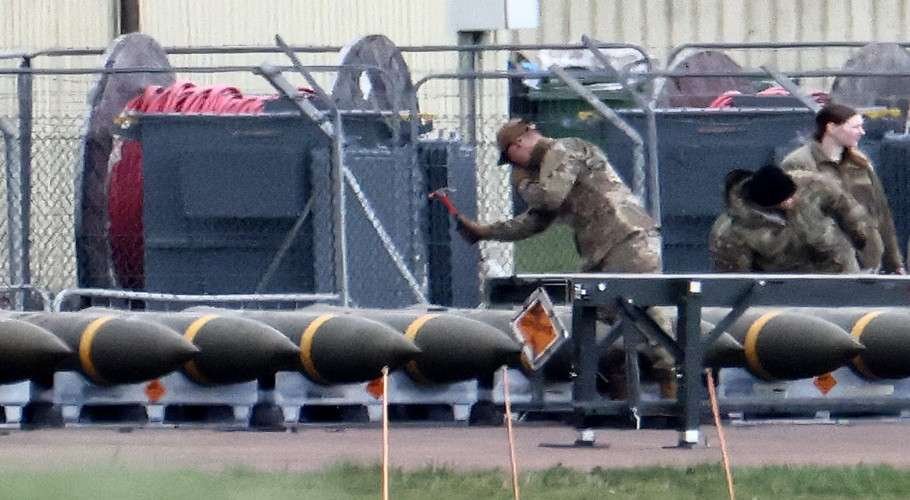
WASHINGTON: The Pentagon has held preliminary talks with top executives at General Motors, Ford Motor, GE Aerospace, and Oshkosh about converting portions of their commercial manufacturing capacity to produce weapons, munitions, and tactical military hardware, including missiles and counter-drone systems, according to people familiar with the discussions.
The talks, which are described as exploratory and wide-ranging, have involved GM Chief Executive Mary Barra and Ford CEO Jim Farley, among others. No contracts have been signed and no full-scale production shifts have been announced. Officials are still identifying barriers to such a transition, including contracting rules and regulatory hurdles, as well as examining how commercial manufacturers could supplement — rather than replace — traditional defense contractors.
The discussions reflect mounting pressure on the U.S. defense industrial base, which senior officials have described as too narrow and too slow to meet the country’s current and future security needs. American weapons and munitions stockpiles have been significantly drawn down following sustained support for Ukraine since Russia’s full-scale invasion in 2022, as well as military operations linked to escalating tensions with Iran. Those drawdowns have exposed critical gaps in the Pentagon’s ability to replenish supplies at the speed modern conflict demands.
The Trump administration has moved aggressively to address those shortfalls. A proposed defense budget — the largest in modern American history — signals an intent to dramatically expand the industrial base beyond the handful of established contractors that have long dominated military procurement. Administration officials have explicitly called for automakers and large-scale commercial manufacturers to play a greater role, leveraging their production expertise and factory infrastructure.
Stephen Feinberg, President Trump’s nominee for Deputy Defense Secretary, flagged the need for such an expansion as early as the beginning of this year, citing the importance of bringing companies like GM and Ford into the fold to scale production and keep pace with strategic competitors, particularly China. Officials have indicated the talks with automakers began before the most recent escalation with Iran.
The approach carries unmistakable historical echoes. During the Second World War, Detroit’s automotive giants — among them General Motors and Ford — halted civilian vehicle production entirely and pivoted to manufacturing tanks, bombers, and military trucks, earning the industry the enduring title of the *Arsenal of Democracy*. A more recent parallel emerged during the COVID-19 pandemic, when both GM and Ford retooled assembly lines to produce ventilators amid a national shortage.
The current discussions suggest the Pentagon is once again looking to America’s vast commercial manufacturing base to compensate for what traditional defense contractors alone cannot deliver quickly enough. Whether the talks translate into binding agreements and actual production shifts will depend on how swiftly the two sides can resolve the legal, logistical, and contractual obstacles that officials have already begun to map out.