

There is a peculiar kind of diplomacy happening right now—one where missiles fly, drones swarm, and yet everyone insists the war is technically over. When Secretary of State Marco Rubio declared “Operation Epic Fury is concluded” , he wasn’t announcing peace. He was announcing something far more interesting: the invention of a new category of conflict, one that exists in the liminal space between war and peace, where the rules are written in real-time and the threshold for “violation” is known only to the man who refuses to define it.
“They know what to do, and they know what not to do,” President Trump said when asked what would constitute a ceasefire breach . “You’ll find out because I’ll let you know.” This is not the language of treaties or international law. This is the language of a casino owner who knows that the house always wins when it controls the definition of the game.
The IRGC’s Rogue Theater
Perhaps the most revealing development is the reported fury of Iranian President Masoud Pezeshkian over the IRGC’s missile and drone strikes on the UAE—attacks he described as “completely irresponsible” and carried out without his government’s knowledge . This is not merely an internal Iranian squabble. It is a window into a regime where the military wing operates as a parallel state, one that appears to answer not to the civilian government but to its own calculus of survival.
IRGC Commander Ahmad Vahidi has reportedly become the most powerful figure in Iran, so dominant that he has allegedly prevented Pezeshkian from even contacting Supreme Leader Mojtaba Khamenei . When a nation’s president cannot reach its supreme leader because a military council blocks his calls, we are witnessing something beyond civil-military tension. We are watching a slow-motion coup dressed in revolutionary garb.
The IRGC’s attacks on the UAE serve multiple purposes: isolating the Emirates from other Gulf states, punishing its growing alignment with the U.S. and Israel, and—crucially—sabotaging the very negotiations that Pezeshkian’s faction favors . The Revolutionary Guards do not want a deal. A deal means economic opening, civilian oversight, and the gradual erosion of their parallel power structure. War, or the permanent threat of it, keeps them indispensable.
The Pakistan Conduit: Diplomacy’s Unlikely Lifeline
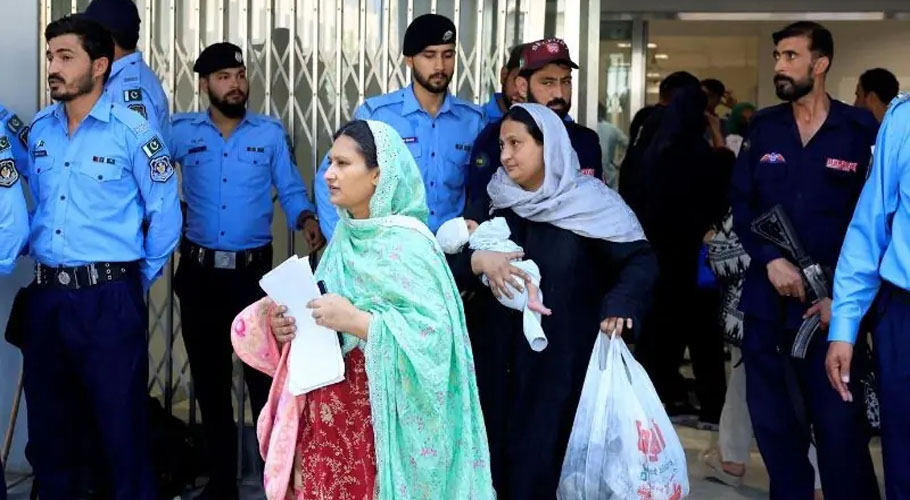
And then there is Pakistan, the conduit through which all of this flows. The decision to pause Project Freedom at Pakistan’s request is more significant than it appears. Islamabad is not merely hosting talks; it is actively shaping their tempo, pressing both sides toward what Trump has called a potential “final agreement” .
Pakistan’s role reveals the new geometry of Middle Eastern diplomacy. Traditional Arab powers—Saudi Arabia, the UAE, Egypt—have been sidelined in favor of a South Asian nuclear state with deep ties to both Iran and the U.S. This is not accidental. Pakistan offers something the Gulf states cannot: credible distance from both Israeli and Iranian interests, plus the implicit leverage of its own nuclear arsenal. When Pakistan asks for a pause to give talks a chance, both Washington and Tehran listen.
But we should ask: what does Pakistan want in return? A permanent resolution to the Iran crisis would stabilize energy flows through the Strait of Hormuz, but it would also cement Pakistan’s status as the region’s indispensable mediator—a position that comes with economic aid, military cooperation, and diplomatic immunity on issues like Kashmir. The pause is a gift to diplomacy, yes, but it is also an investment in Pakistan’s strategic brand.
The Threshold Problem
Defense Secretary Pete Hegseth’s insistence that Iranian attacks on U.S. forces and the UAE do not violate the ceasefire raises a profound question: if missile strikes and drone swarms don’t count as violations, what does? The answer appears to be: nothing that Iran is currently capable of doing.
This is strategic logic turned on its head. The U.S. has achieved its military objectives—Rubio claims the operation’s goals were met , and Trump boasts that “we basically wiped out their military in about two weeks” . Having degraded Iran’s conventional capabilities, Washington can now afford to tolerate low-level violence because Iran cannot escalate to a level that threatens American interests. The ceasefire is not a mutual agreement to stop fighting; it is a unilateral American decision to stop caring about Iranian violence that falls below a certain threshold.
Iran, for its part, understands this. Its Foreign Minister Abbas Araghchi has called Project Freedom “Project Deadlock” , recognizing that the U.S. naval escorts are designed not to win a military victory but to demonstrate that Iran cannot win one either. The attacks on commercial shipping and the UAE are not attempts to break the ceasefire; they are attempts to prove that Iran still has agency, still has teeth, still matters.
The Illusion of Finality
Rubio’s announcement that the U.S. has “moved on” from Epic Fury to Project Freedom , and now to a paused Project Freedom, suggests an administration desperate to declare victory without actually ending the conflict. “We don’t want to go in and kill people,” Trump said . “I don’t want to. It’s too tough.” This is the rhetoric of a man who has discovered that war is harder than he imagined and is now searching for an exit that looks like an entrance.
But there is no final agreement yet. There are talks, “making progress” according to Araghchi , but the same Iranian official warns that the U.S. should be “wary of being dragged back into quagmire by ill-wishers” . The ill-wishers, presumably, are the IRGC commanders who keep launching missiles while the diplomats shake hands.
The deeper tragedy is that this conflict was always solvable. Iran’s nuclear program was a problem of verification and incentives, not an existential threat requiring two months of bombing. The strait could have been kept open through international maritime law and coalition patrols, not unilateral American naval operations. But the path of escalation, once chosen, creates its own logic. Now we have a president who doesn’t want to fight, a military that doesn’t want to stop, and an Iranian regime at war with itself.
What Comes Next
If the talks in Pakistan succeed, we will see a deal that looks nothing like the “unconditional surrender” Trump once demanded. It will be a face-saving compromise: limited Iranian enrichment, nominal American oversight, a gradual lifting of sanctions, and a tacit acknowledgment that the IRGC will remain a power within Iran. The UAE attacks will be memory-holed. Project Freedom will be rebranded as a multinational effort. And Trump will claim the greatest diplomatic victory since Nixon went to China.
If the talks fail, the pause will end, Project Freedom will resume, and we will discover where the real threshold lies. But by then, the IRGC will have had time to reconstitute, the Gulf states will have grown more anxious, and the world will have grown accustomed to $100 oil.
The winding down is real, but it is not peace. It is the transformation of a hot war into a cold one, of explicit violence into implicit threat, of international law into personal diplomacy. And in that transformation, the only clear winner is the ambiguity itself—the gray zone where no one is quite sure what the rules are, which means everyone with power gets to write their own.
Pakistan will continue to play its role, the conduit and the nudger, the host of talks that may or may not matter. The IRGC will continue its parallel war, testing the threshold, probing for weakness. And American officials will continue to insist that the ceasefire holds, even as the missiles fly, because to admit otherwise would be to admit that the war they declared over was never truly won.
The conflict is winding down, yes. But what it is winding down into may be more dangerous than what it was.