
ISLAMABAD: Pakistan has successfully brought home more than 1,100 ancient antiquities from countries including the United States, Italy, France and the United Kingdom, marking one of the largest recoveries of cultural heritage in recent years.
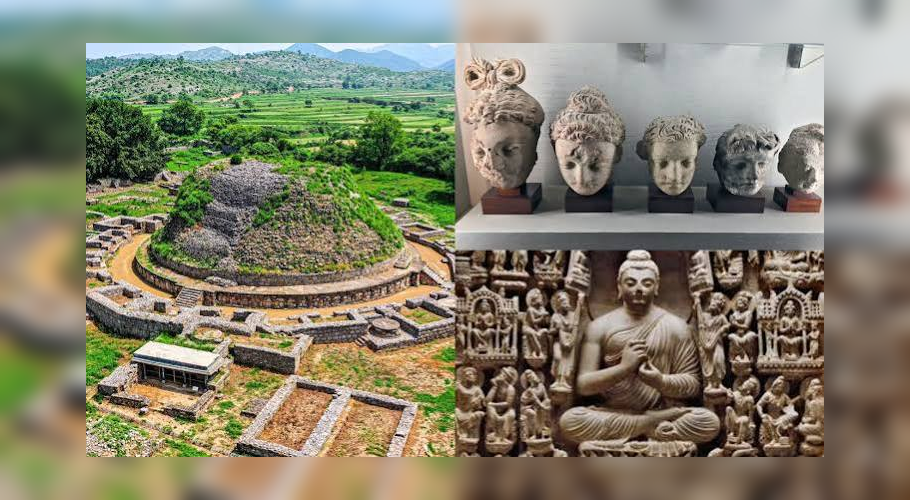
Media reports suggest that the collection, comprising thousands‑year‑old sculptures, pottery, coins, Buddhist artifacts and rare examples of Gandhara art, is now on public display at the Islamabad Museum, attracting citizens, foreign experts and tourists from China, South Korea and the US.
Officials said the process of identifying and returning these antiquities had been underway for several years, made possible through cooperation with intelligence and law enforcement agencies abroad.
Subhash Kapoor Case
A source in the Ministry of Culture noted that the case of Subhash Kapoor, a prominent Indian art dealer convicted of smuggling South Asian antiquities, played a significant role in tracing Pakistani heritage items. During investigations in the United States, American agencies contacted the Pakistani embassy, enabling Islamabad to complete legal and diplomatic procedures for the recovery.
Authorities clarified that not all objects had been stolen from Pakistani museums. Some were removed from the region before the 1947 partition, while others had remained in private collections overseas for decades.
Pakistan has since established a formal system of cooperation with the US for cultural heritage protection, including a 2023 memorandum of understanding to curb the illegal trade of cultural property.
The Ministry of Culture emphasized that ancient heritage belongs to the people of the region where it was discovered, not to foreign markets or private ownership.
Among the artifacts now displayed are terracotta sculptures from Mehrgarh dating back seven thousand years, relics of the Indus Valley Civilization, ancient coins and pottery, as well as Buddhist sculptures from the Gandhara period, estimated to be around two thousand years old.
These include Buddha statues, Bodhisattva figures, stone and stucco reliefs, and other Buddhist works of art.
Pakistan maintains that the Gandhara civilization was centered in present‑day Punjab and Khyber Pakhtunkhwa, particularly Swat, Peshawar and Taxila, despite India’s claims over some artifacts.
Officials hailed the cooperation of Italy, France, the UK and the US in identifying and returning cultural treasures, underscoring that Pakistan bore the costs of repatriation.
The Islamabad Museum’s exhibition now offers a rare glimpse into the country’s layered past, reaffirming its place as the custodian of South Asia’s ancient civilizations.