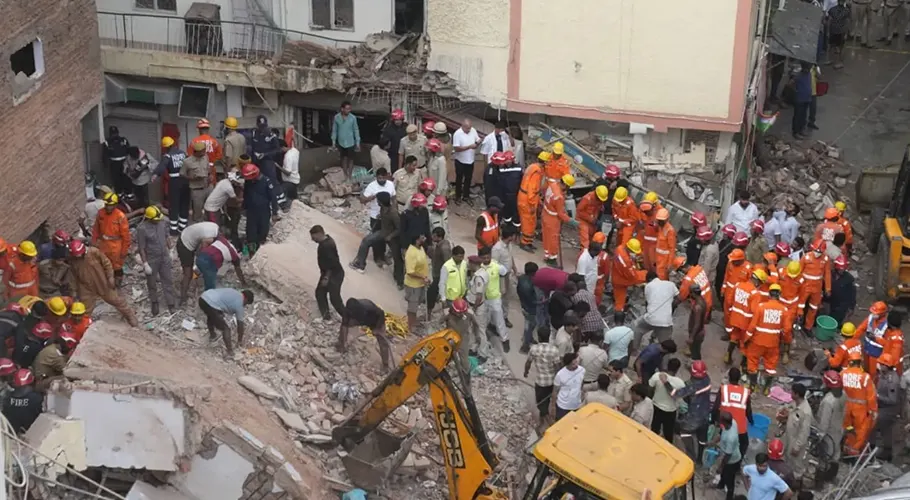

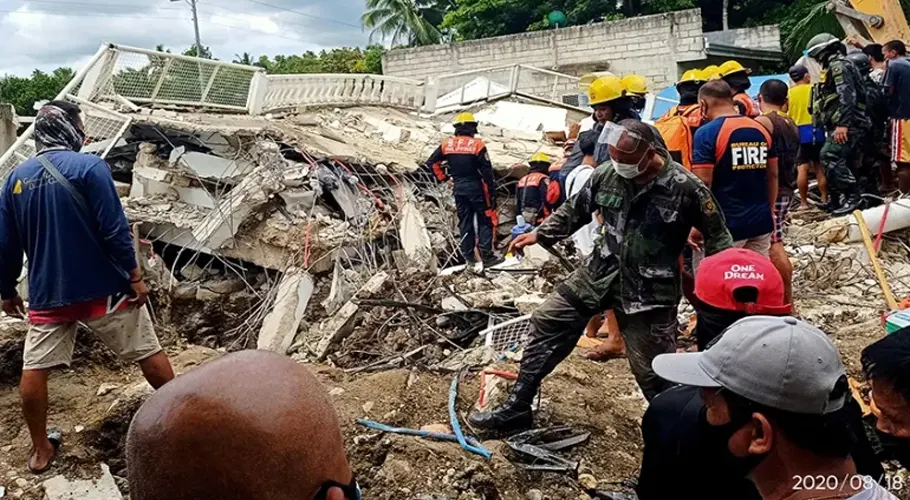
At least 70 people have been killed and more than 200 injured after a powerful 6.9 magnitude earthquake struck the Philippines’ central Visayas region on Tuesday night, with Cebu province bearing the brunt of the devastation. Authorities warned the toll could rise further as rescue operations face difficulties reaching cut-off areas.
The quake hit shortly before 10 p.m. local time, shaking Cebu — a city of over 3 million people — and nearby districts. It triggered power outages, collapsed buildings, and destroyed key infrastructure, including at least three bridges and a major road. The Philippine Institute of Volcanology and Seismology reported multiple aftershocks but confirmed there was no tsunami threat.
San Remigio town in northern Cebu reported the highest number of fatalities, including four people killed when a sports complex collapsed during a basketball game. Victims also included members of the Bureau of Fire Protection, the Philippine Coast Guard, and a young child trapped under rubble.
Heavy rains and blocked roads have hampered rescue and relief operations, leaving many residents without access to food, clean water, and shelter. Cebu’s governor ordered emergency supplies and clearing equipment to be rushed to affected areas, while aid teams from neighboring provinces, such as South Cotabato, are being deployed.
Eyewitnesses described scenes of fear and chaos. “It felt like the end of the world. We rushed outside, praying for our lives,” said Emma Sentilen, a Cebu resident whose home was badly shaken.
Authorities have suspended schools and government offices across Cebu for safety inspections. Several churches and historic structures under the Archdiocese of Cebu have also been closed after sustaining damage.
The Philippines, located on the seismically active Pacific “Ring of Fire,” is no stranger to destructive earthquakes. Last year, a 6.7 magnitude tremor in Mindanao killed seven people. The Cebu earthquake is now among the deadliest disasters to strike the country in 2025.