

The pristine, glass-fronted towers of One Constitution Avenue, usually a symbol of Islamabad’s elite lifestyle, have become the latest battleground in a ruthless, behind-the-scenes tug-of- war. But this is not a legal dispute over leases or a bureaucratic enforcement of the law. This is a collision between two powerful camps, fought by two men—Absar Alam and Mohsin Naqvi—who act not as public representatives, but as operators of the entities they serve.
Behind the veneer of “enforcing court orders” and “protecting the law” lies a high-stakes turf war that has rattled the capital and exposed the raw power dynamics currently suffocating the Pakistani state.
On one side, we have Absar Alam, the former PEMRA chairman and a man whose proximity to the Sharif brothers is an open secret. He does not seem to speak as a journalist; rather, he speaks as an insider whose personal interests have finally collided with the machinery of the state.
On the other side stands Mohsin Naqvi, the Interior Minister, a figure widely viewed as the civilian shield of the military establishment, seems to be pushing an agenda that often bypasses the traditional civilian cabinet structure.
The issue of One Constitution Avenue is not considered as a battle of ideologies—it is a struggle for control over prime real estate and political dominance. Both men are playing for their respective masters, using the law as a blunt instrument to settle scores.
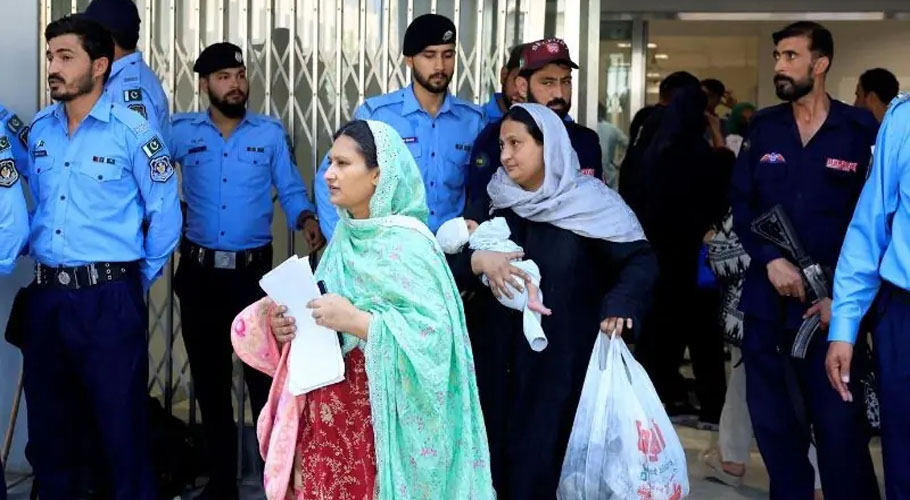
The true nature of this conflict was unmasked on May 1, 2026. Under the cloak of night, Islamabad police, backed by the Rangers, descended upon the luxury apartments with a ferocity usually reserved for high-value targets. Residents—including diplomats, overseas Pakistanis, and members of the country’s elite—were given mere hours to abandon their homes.
The optics were disastrous. The swift, militarized eviction sent shockwaves through the diplomatic community, resulting in demarches from four European nations and a frantic attempt to preserve what remains of Pakistan’s investment image. But for the power-players, the optics were secondary. The goal was simple: displacement.
The “Faiz Playbook” and the Lahore Connection
Absar Alam, stripping off the thin veil of journalistic detachment in a viral YouTube vlog, accused Naqvi of orchestrating a land-grab maneuver that mirrors the darkest tactics of the “Gen Faiz” era. Alam’s accusation is chilling: he alleges that the forced, unceremonious eviction is not about the CDA’s lease defaults at all, but rather a calculated move to clear the site so the massive, multi-canal plot can be handed over to a favored Lahore-based developer.
Alam’s defense is personal—he owns a small unit in the complex—but his narrative is broader. He questions the timing, the lack of due process, and the sheer hostility of the action. By framing Naqvi’s actions as a return to the “Faiz Hameed playbook,” Alam is sending a clear signal: the camp he represents (the Sharifs) will not sit by while their territory is carved up by the camp Naqvi represents (the Establishment).
The PM’s Pause: A Temporary Ceasefire
The chaos prompted Prime Minister Shehbaz Sharif to intervene, forming a committee and halting the evictions. But do not be fooled by this “restraint.” The PM’s intervention is not necessarily an act of justice—it is a strategic pause in an escalating conflict.
The One Constitution Avenue controversy has become a microcosm of the current state of Pakistan. The law, the judiciary, and the police have become mere chess pieces in a game played by two camps, neither of which has any real interest in the welfare of the residents or the integrity of the capital’s development rules.
As the “investigation” begins, the public should look past the noise. Whether it is Absar Alam defending his investment by crying “foul play,” or Mohsin Naqvi asserting authority to reshape the city’s map, the reality remains: The resident is collateral, the law is a weapon, and the fight for One Constitution Avenue is really a fight for who owns the future of Islamabad.
For now, the battle is paused, but the war for control is just heating up.