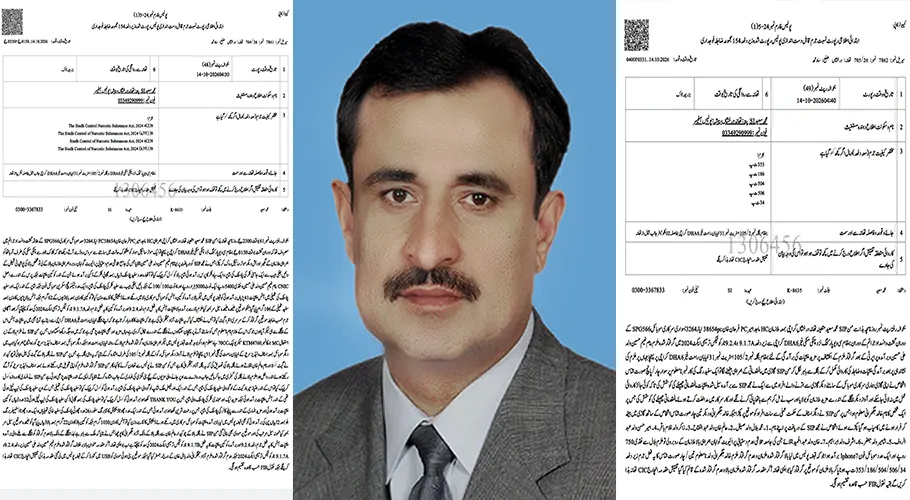


ISLAMABAD: Senior journalist Matiullah Jan has alleged that his WiFi device was cloned for “nefarious purposes,” raising concerns about possible surveillance and misuse of personal connectivity.
Taking to X (formerly Twitter) he said the telecom company involved has neither disclosed when the incident occurred nor accepted responsibility, prompting him to escalate the matter to the Pakistan Telecommunication Authority (PTA).
My Jazz WiFi device had been cloned by some unscrupulous elements for nefarious purposes. @jazzpk at Redco Plaza blue area refuses to tell me since when the device had been closed and what action had so far been taken by the company in this regard. I have been advised to access… pic.twitter.com/EKMzBiSPfa
— Matiullah Jan (@Matiullahjan919) July 2, 2026
Jan, known for his outspoken views on press freedom, told media outlets that the cloning of his mobile broadband device amounted to a serious breach of privacy.
“The company is refusing to share details and is not owning up to what happened,” he said, adding that he would pursue the case with PTA.
Technical context
Experts told MM News that true hardware-level cloning — replicating a device’s IMEI or electronic serial number — is difficult on modern GSM, LTE and 5G networks used in Pakistan.
While cloning was more common on older CDMA systems, current networks employ stronger authentication, encryption and radio fingerprinting to prevent duplication.
More realistic scenarios involve SIM cloning or SIM swapping, where attackers duplicate subscriber identifiers or trick carriers into issuing a new SIM tied to the victim’s number. This allows interception of calls and SMS. Recent vulnerabilities in eSIM technology have also made profile cloning more feasible.
For WiFi or mobile broadband devices, cloning could mean duplicating credentials, MAC addresses or subscriber identities to illicitly use the connection or intercept traffic. Other possibilities include account takeover, spyware installation, or network-side impersonation using stolen credentials.
Pakistan context
Interestingly, telecom complaints of this nature are not unheard of in Pakistan. PTA maintains procedures for investigating such cases, though operators often cite privacy and security concerns when asked to share logs of device registrations or usage patterns. Experts note that carriers would typically have records showing if a device identity was used from multiple locations.
It is also pertinent to mention here that journalists in Pakistan have previously alleged surveillance and monitoring of their communications. Whether Jan’s device was actually cloned remains to be established through a formal investigation by the carrier and PTA.
Analysts caution that while cloning or impersonation is technically possible, it usually occurs through SIM-level tricks or account compromise rather than full hardware duplication.