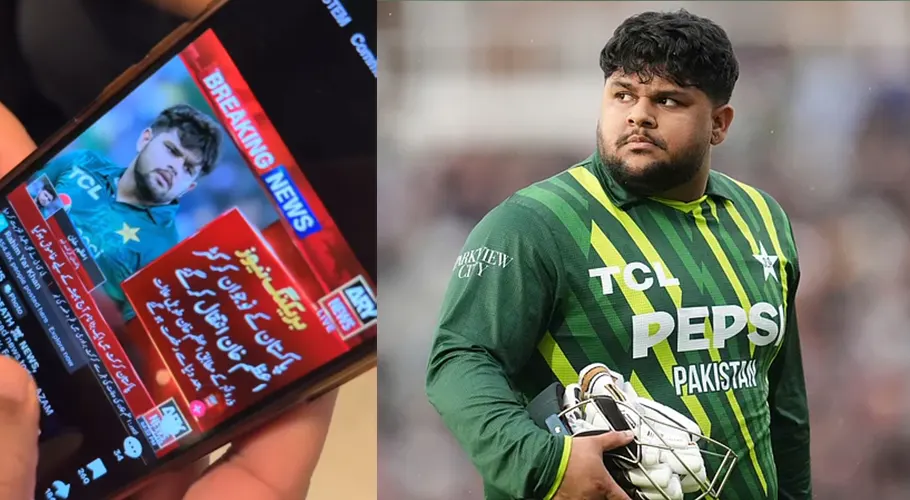


MUZAFFARABAD: Prime Minister of Azad Jammu and Kashmir (AJK), Faisal Mumtaz Rathore, has strongly refuted a local news report claiming he advocated for the dissolution of the controversial refugee seats in the region’s legislative assembly, clarifying that his administration is seeking legislative reforms rather than the disenfranchisement of Kashmiri refugees.
The controversy erupted after a private Urdu news channel — which is already serving a 15-day broadcasting ban for airing religiously contemptuous content during Muharram — ran a headline asserting that the premier considered the elimination of the refugee seats a legitimate public demand.
Reacting sharply to the report, Prime Minister Rathore termed it an instance of gross misreporting, maintaining that while he believes the existing representation formula needs to be restructured and retuned to reflect current demographics and administrative realities, his government has no intention of stripping refugees of their constitutional right to political representation.
Misreporting. I’ve always maintained that the current status of these seats needs to be changed. The formula of refugees’ representation needs to be retuned. Nobody can disenfranchise or deprive our refugees of their right to representation in legislative assembly. https://t.co/hHDcg880eu
— Faisal Mumtaz Rathore (@PMofAJK) July 1, 2026
It may be added here that the dispute over the 12 refugee seats remains one of the most polarizing fault lines in AJK politics. Out of the 53 total seats in the AJK Legislative Assembly, 12 are strictly reserved for Kashmiri refugees and their descendants who fled Indian-administered Jammu and Kashmir during the conflicts of 1947 and 1965.
These voters are scattered across various provinces of Pakistan, primarily in Punjab and Sindh. Critics, most notably the Joint Awami Action Committee (JAAC), have long argued that these seats distort the local mandate, allowing mainstream Pakistani political parties to engineer majorities and form governments in Muzaffarabad by winning seats contested far outside AJK’s geographical borders.
The issue reached a boiling point following violent mass protests led by the JAAC, which paralyzed the region and forced a tense standoff with the government.
Although the government eventually signed an agreement to review the protesters’ grievances, the AJK Supreme Court recently insulated the seats from abrupt executive action.
In a landmark ruling on a presidential reference, the apex court declared the refugee seats constitutionally protected under Article 22 of the AJK Interim Constitution, ruling that they cannot be altered or abolished through executive decrees or public pressure, but solely through a formal constitutional amendment requiring a two-thirds majority in the assembly.
With the highly anticipated AJK general elections scheduled for later this month, the political temperature in the valley has risen significantly, further compounded by the government’s subsequent decision to proscribe the JAAC.