
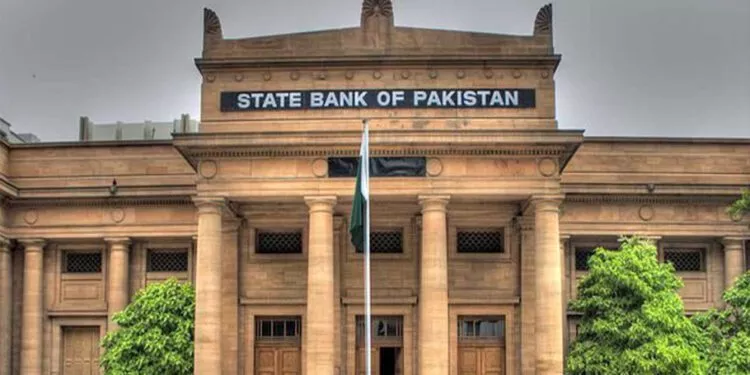
The State Bank of Pakistan today released its Half-Year Monetary Policy Report. The publication reflects the State Bank’s commitment to presenting monetary policy decision-making and the stance of the Monetary Policy Committee (MPC) to the public with greater transparency.
The report reviews the economic developments and outlook that shaped the decisions of the Monetary Policy Committee since January 2026.
During the period under review, economic conditions and the outlook were significantly affected by geopolitical developments. The outbreak of conflict in the Middle East towards the end of February led to a sharp increase in global energy prices, freight and insurance costs, while also disrupting supply chains. Despite this major shock, economic outcomes for FY26 remained broadly in line with the projections announced following the Monetary Policy Committee meeting in January 2026.
The report highlights that the State Bank’s cautious monetary policy stance has helped contain the second-round effects of the energy price shock, while also keeping inflation expectations of stakeholders under control. Meanwhile, the government ensured fiscal discipline by passing the increase in global prices through to domestic prices in a timely manner, introducing targeted subsidies to promote energy conservation, and implementing austerity measures. These measures helped moderate aggregate demand and ensured that demand-side pressures remained subdued.
According to the report, inflation is expected to decline going forward and stabilize near the upper bound of its target range by the end of FY27. Economic growth is expected to accelerate and remain in the range of 3.5 percent to 4.5 percent. The current account deficit is projected to remain between zero and 1 percent of GDP. This would facilitate continued foreign exchange purchases by the State Bank and support the achievement of the foreign exchange reserves target of US$20.20 billion by December 2026. The State Bank’s foreign exchange reserves are projected to increase further by the end of FY27.
The Monetary Policy Report also discusses various risks to the macroeconomic outlook. These include the evolving geopolitical situation in the Middle East, which could push global energy and other commodity prices above the assumed levels and consequently affect the macroeconomic outlook. The report also highlights climate-related risks, particularly El Niño conditions and floods, which could adversely affect the economy.
Finally, delays in implementing structural reforms could lead to a further decline in exports, slower productivity gains, and increased inflationary and external account pressures. Such delays could also weaken the economy’s ability to sustain higher economic growth without creating additional inflationary and external-sector pressures.
The Monetary Policy Report also includes six analytical boxes covering key concepts related to inflation and monetary policy. These include recent developments in the monetary policy transmission mechanism; the role of central banks in responding to supply-driven inflation; the use of different measures of inflation globally and by the State Bank; the growing volume of Open Market Operations (OMOs) and their implications for monetary policy; and the use of various sentiment surveys to assess stakeholders’ expectations regarding different aspects of the economy.