

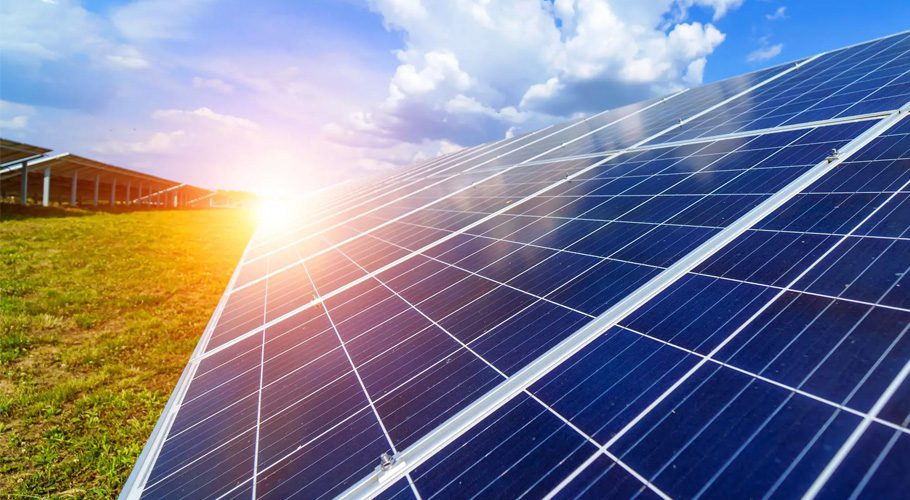
Lahari Saha, a researcher at the University of Maryland, Baltimore County, is developing a novel approach to improve the efficiency of solar panels. Her research involves leveraging plants’ capability to convert sunlight into chemical energy through biological molecules such as chlorophyll, which are excellent at capturing sunlight and converting it to energy.
According to a report published online, current solar panels are inefficient and contain toxic materials, a different approach that harnesses plant molecules like chlorophyll could lead to improvements.
Our current solar panels aren’t very efficient; they are only able to convert up to about 20 percent of the sun’s energy into electricity. As a result, to generate a lot of electricity, the panels require a lot of space—sometimes leading forests to being cut down or farms to being replaced by solar. If solar panels were more efficient, much smaller panels could make the same amount of electricity, and wouldn’t claim as much land.
To make solar panels that are more efficient, Lahari Saha, in the lab of Professor Chris D. Geddes at the University of Maryland, Baltimore County, is working to make electricity in a unique way—by harnessing plants’ abilities to convert sunlight into chemical energy using biological molecules, like chlorophyll, that excel at absorbing sunlight. Saha will present her work on Wednesday, February 22 at the 67th Annual Biophysical Society Meeting in San Diego, California.
Their goal is to use biological molecules to make electricity that can then be harvested and used to power devices or stored in batteries for later use. The process involves leveraging molecules’ fluorescence. “Any sort of molecule that fluoresces, gives off light. If we excite the fluorophore, it can transfer its energy to metal nanoparticles, and if the particles are close enough to each other, they will knock off electrons and generate current,” Saha explained. The process is not just limited to molecules that fluoresce, Saha explained, they just need to have high absorption of light such as chlorophyll, beta carotene, or lutein. Each of these is relatively inexpensive and easy to derive from plants
The other benefit of this kind of fluorescence-based solar panel is that it would be easier to recycle. Currently, solar panels rely on expensive materials like silicon and contain elements that can be toxic, including lead and cadmium—in most states solar panels are considered hazardous waste when it’s time to dispose of them. But Saha is hopeful that her solar panels will be primarily plant-based molecules and other materials that are relatively prevalent like copper, making them easier to recycle when the time comes. Plus, by selecting materials with greater longevity, she hopes the solar panel will last longer before it is time to dispose of them.
But Saha’s top goal is to make a solar panel that’s more efficient, “so it doesn’t have as large of a footprint,” she said. She hopes her smaller solar panels will allow farms to maximize food production over generating energy, and will keep forests preserved.