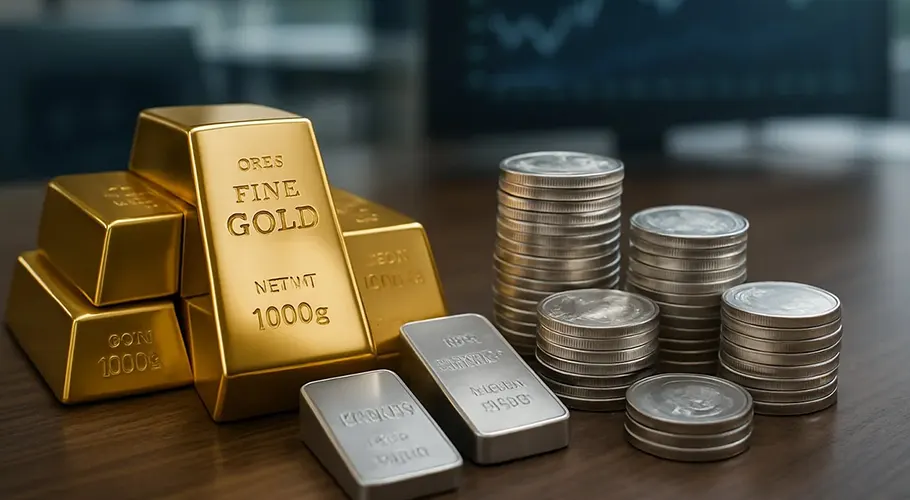


KARACHI: Gold prices in Pakistan remained broadly stable on Sunday, trading around Rs.496,000–497,000 per tola (24K) in the local sarafa markets, with slight variations across cities and jewelers.
In Karachi’s main bazaar, 24-karat gold was quoted at Rs496,962 per tola, while the nationwide average stood at approximately Rs.42,519 per gram. For 22-karat gold, rates hovered between Rs.414,000–415,000 per tola, depending on local markups. These levels are marginally below the peaks recorded in early January 2026, when some trackers briefly touched Rs.510,000 per tola for 24K.
Internationally, spot gold is trading around $4,750 per troy ounce, or about $153 per gram, reflecting a mild pullback in recent days. When converted at the current interbank exchange rate of PKR 300–310 per USD, the global reference price remains well below domestic valuations. Analysts attribute this gap to local demand, taxes, and premiums, which continue to keep Pakistani bullion elevated relative to international benchmarks.
Despite the global softness, Pakistani gold remains near recent highs in rupee terms. The local premium over international prices has widened slightly, reflecting both strong cultural demand and hedging against inflationary pressures. Traders note that rupee weakness against the dollar amplifies domestic bullion rates, even when global prices ease.
The broader backdrop remains shaped by geopolitical developments.
The Pakistan-brokered ceasefire between the United States and Iran, which reopened the Strait of Hormuz, has temporarily calmed fears of prolonged disruption in global oil supplies. However, the truce is set to expire in two weeks, leaving investors cautious about renewed volatility.
US–Iran negotiations end in deadlock after 21 hours in Islamabad
Market watchers expect bullion to remain sensitive to both currency movements and geopolitical headlines, with silver tracking industrial demand and energy market trends. For now, gold in Pakistan continues to trade close to historic highs, underscoring the resilience of local demand despite international price moderation.