
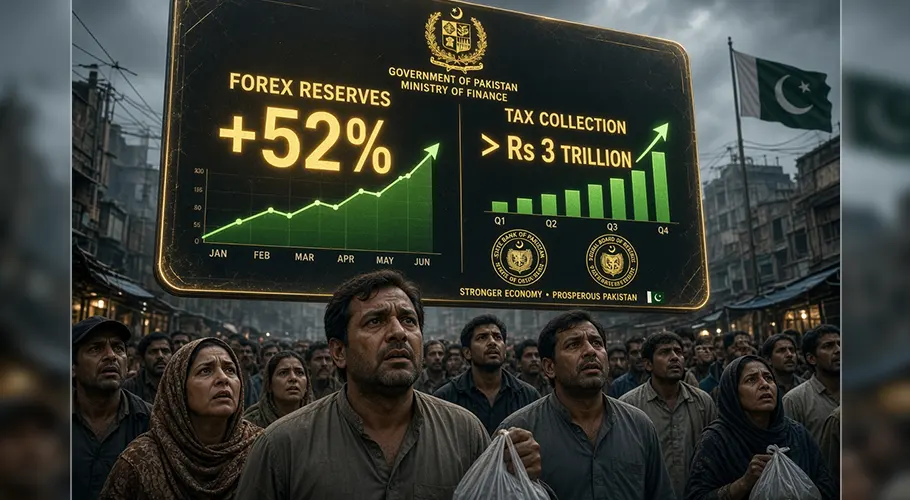
ISLAMABAD: The government has highlighted improvements in the economy, rising foreign exchange reserves and stronger tax collection. However, a key question remains: when will ordinary citizens begin to benefit from these gains? Pakistan’s foreign exchange reserves rose by 52% to $21.5 billion, while Federal Board of Revenue (FBR) tax collection increased by 7% to Rs 3.1 trillion. Despite these figures, relief remains a pressing concern for people grappling with inflation, high electricity and gas bills, and rising living costs.
According to Khurram Shehzad, Federal Adviser on Economic and Financial Reforms, Pakistan’s exports increased by 11% to $11.2 billion during the first quarter of fiscal year 2026–27, while remittances rose by 14% to $10.9 billion. IT exports grew by 18%, while freelancers’ earnings increased by 46% to $550 million.
Government figures indicate that tax collection exceeded the target set for the first quarter. However, questions remain about whether taxpayers are receiving adequate public services in return, including quality healthcare, education, affordable electricity, better transport facilities and relief in meeting essential needs.
The government also reported that the federal government’s total debt fell by Rs 714 billion to Rs 86 trillion compared with June 2026. Domestic debt declined by Rs 684 billion. Meanwhile, growth in digital payments, company registrations and investment has been presented as evidence of economic progress.
However, improvements in economic indicators do not necessarily translate into a better standard of living for ordinary citizens. People want to know how tax revenues are being spent, how transparently public funds are managed, and what measures are being taken to ensure that the benefits of economic growth reach households.
Claims of economic stability will carry greater weight when citizens experience tangible improvements in essential services, better employment opportunities and meaningful relief from inflation, alongside the taxes they are required to pay.