
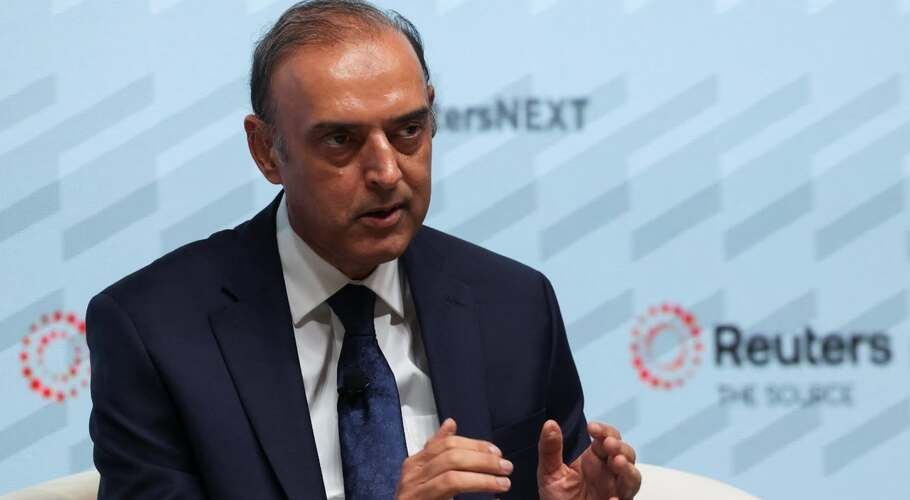
KARACHI: State Bank of Pakistan (SBP) Governor Jameel Ahmed said on Friday that Pakistan’s economic indicators have strengthened over the past year on the back of coordinated efforts by the government, law enforcement agencies and the business community, adding that the country’s credit rating is expected to improve further.
Addressing a media briefing in Karachi, the governor said economic growth would continue into the new fiscal year, noting that GDP expansion in the outgoing fiscal year had matched the central bank’s own projections.
He said headline inflation stood at 11.8 per cent in June, broadly in line with the SBP’s expectations, though he acknowledged that price pressures had run slightly higher than forecast because of the fallout from tensions in the Middle East.
MM News understands that this June reading marks a sharp jump from the 5-7 per cent range the SBP had been targeting for FY26 and from the 7.2 per cent level reported as recently as May, reflecting the impact of the regional conflict on energy and freight costs that the governor has flagged in earlier briefings.
On the external account, the governor said the $17.5 billion current account deficit recorded in 2022 — then equivalent to 4 per cent of GDP — had been the country’s biggest challenge at the time. He said the current account had remained in surplus for 11 months of FY2025-26, with data for June still being compiled, and that the full-year deficit would likely settle between zero and 1 per cent of GDP.
Reserves and debt
Jameel Ahmed said the SBP’s foreign exchange reserves rose by $5.5 billion over the fiscal year to close at $18.4 billion, even as the country retired $5 billion in external liabilities.
He said external debt had little changed from four years ago, and that the country’s reserves now far exceeded the import-cover benchmark of 15 days’ worth of imports — an improvement he said should support a better sovereign credit rating.
The governor added that short-term commercial borrowing had increasingly been replaced with longer-term multilateral debt, improving the average maturity profile of Pakistan’s obligations. He said this would allow future Eurobond issuances on more favourable terms and reduce the overall interest cost of external debt, with the country now relying on long-term financing rather than expensive commercial loans.
He noted that external debt had grown by roughly $6 billion a year between 2015 and 2022, but had not increased since 2022.
Remittances
The State Bank Governor said workers’ remittances — a key source of foreign exchange along with exports — were expected to exceed $41.5 billion in FY2026, with a further improvement projected for the coming fiscal year.
Despite regional turmoil, he said remittance inflows were not expected to fall by more than $1 billion, and that banks would absorb all transaction costs on remittances above $200.
He also said the Sohni Dharti Remittance Programme — the incentive scheme for overseas Pakistanis introduced in 2021 — was being wound down in favour of a new, improved scheme that would include additional rewards. The objective, he said, was to sustain remittance flows, which he described as the “lifeline” of the economy, adding that Pakistan would remain reliant on remittances until exports registered a substantial and sustained increase.