
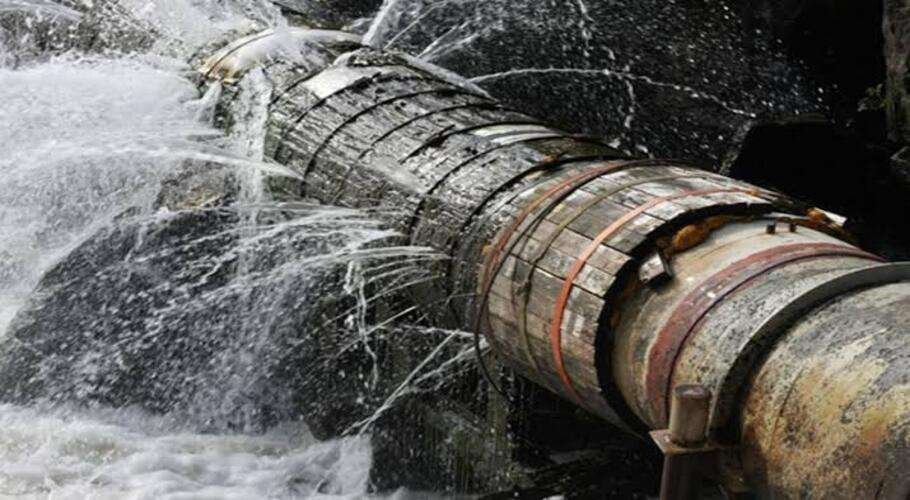
KARACHI: A sudden drop in water pressure has left residents across four union councils wondering when their taps will run full again. The Karachi Water and Sewerage Corporation (KW&SC) confirmed that a major leak sprung in a critical 24-inch diameter pipeline running through Lyari.
To prevent massive flooding and allow engineering teams to intervene, the utility has temporarily shut off the valves, completely suspending the supply to Union Councils 9, 10, 11, and 12.
While the rest of Lyari Town remains unaffected, the reality for the impacted zones is a race against time.
According to KW&SC officials, the technical teams are working on an emergency basis, but the scale of the rupture means repairs could take anywhere from 36 to 48 hours. Once fixed, the water will only return in a slow, phased manner, leaving residents to rely on stored supplies or expensive tankers for the next couple of days.
While some parts of the city lose water to structural failures, others are losing it to systemic neglect. Parallel to the emergency repairs in Lyari, the Water Corporation has launched a massive, uncompromising crackdown against long-term defaulters.
The utility’s recovery teams descended upon Sector 28 of Landhi Town, targeting major commercial and industrial establishments that have allegedly enjoyed water services without paying for them.
The operation resulted in multiple disconnected lines and sealed business premises. The financial stakes are high: the targets in this specific sweep alone owe an estimated PKR 40 million in outstanding dues. Officials hint that this is just the opening salvo in a city-wide campaign to recover billions in unpaid bills.
Meanwhile, in the outer districts of Malir, the narrative is completely different. Nearly half a million people are experiencing a major shift in their daily lives after years of being caught in a bureaucratic tug-of-war.
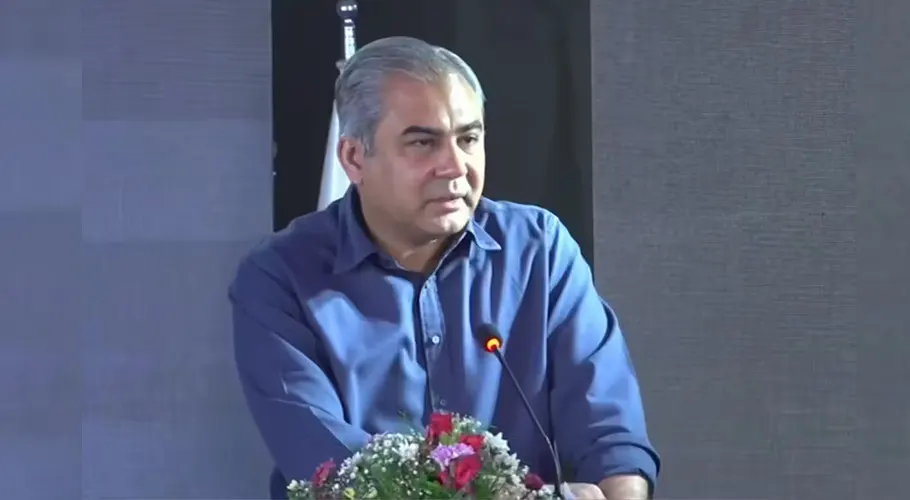
Mayor Karachi Barrister Murtaza Wahab formally inaugurated a newly completed 5 MGD (million gallons per day) water supply project specifically engineered for the Gulshan-e-Hadeed area and its neighboring suburbs.
Speaking to the media at the inauguration, Mayor Wahab highlighted the political and administrative hurdles that previously choked the area’s supply, noting that the Pakistan Steel Mills administration had cut off water to the locality.
“The PPP-led city government has resolved this long-standing issue on a permanent basis,” Wahab stated.
The solution came in the form of a newly laid, 4-kilometer-long dedicated pipeline—a project that cost PKR 500 million and was completed by the Water Corporation in a record time of just two months. Acknowledging past grievances, the Mayor added, “In the past, Malir was neglected despite being a stronghold of the PPP, but now more development projects will be brought for Malir and Gulshan-e-Hadeed.”
For a city of over 20 million people, today’s developments capture the eternal Karachi paradox: a precarious balancing act between crumbling old infrastructure, aggressive revenue collection, and rapid new development.