
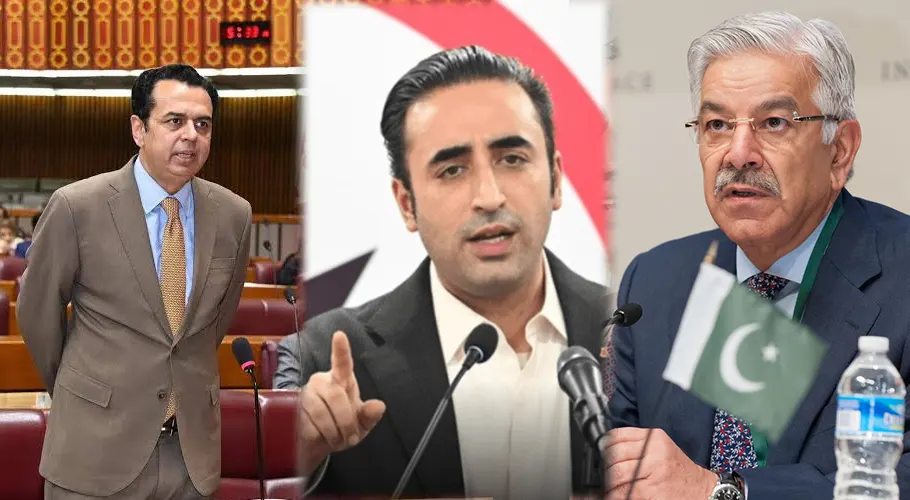
ISLAMABAD: Defence Minister Khawaja Asif and Minister of State for Interior Talal Chaudhry have strongly criticised Pakistan Peoples Party (PPP) Chairman Bilawal Bhutto Zardari over his remarks concerning the creation of new provinces and the possible division of Sindh.
In a statement posted on social media platform X, Khawaja Asif addressed Bilawal, pointing out that the PPP chairman had been part of the federal government since 2022 and should review his own government’s performance before lecturing others.
The defence minister questioned whether Sindh had become an exemplary province after 18 years of PPP rule and whether Karachi’s current condition was something to be proud of.
Asif further stated that the authority vested in those in power was a public trust, not a personal inheritance, adding that no political leader was above accountability.
Meanwhile, Talal Chaudhry criticised Bilawal during a press conference, alleging that the Sindh government had drained the people of the province over the years.
In a sarcastic remark, he said the first question should be whether the people of Sindh had any blood left after years of the provincial government’s rule.
Chaudhry said Bilawal frequently spoke about the Constitution and democracy, but his party’s performance in governance remained questionable. Referring to the PPP’s prolonged rule in Sindh, he raised concerns over the lack of adequate healthcare, education and other basic public facilities.
Commenting on the debate over the creation of new provinces and administrative units, the minister of state said areas facing governance problems needed reforms, questioning the logic of dividing regions where administrative performance was relatively better.
He also questioned Bilawal’s remarks about possible bloodshed, saying that disagreements in a democracy should be resolved through voting and political dialogue, not violence.
Chaudhry further said the governing alliance between the Pakistan Muslim League-Nawaz (PML-N) and the PPP had been established after extensive consultations as a long-term political arrangement, under which both parties were continuing to run the government.