
By Rania Ali
In a frame where light slips softly into shadow, Muhammad Usman Malik does not pose. He exists.
This is fashion photography stripped to its bones. No theatrics, no excess, no demand for attention. Just a man, a muted backdrop, and a mood that lingers. The effect is rare: restraint as power.
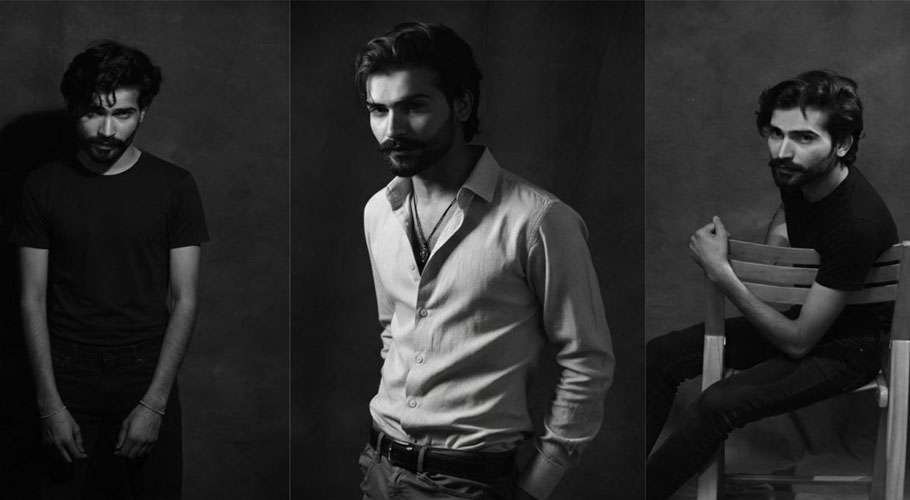
Black and white is the first decision, and it is the right one. Without color to distract, the eye travels differently. It catches the fall of light across a collarbone, the grain of cotton, the weight in a gaze. In the opening image, Malik wears a clean, open collared shirt. The fit is easy, unforced. A single pendant rests at his throat, personal but never loud. His expression lives in the in between: distant, attentive, aware of the lens but refusing to perform for it.
Then the edit tightens. A plain black t-shirt, nothing else. The lighting turns surgical, carving shadows that map his features with precision. There is seriousness here, but it is not severity. It is deliberation. He is not striking a pose. He is holding a pause.
By the final frame, the quiet deepens. Seated, body angled away, eyes still tethered to camera. The chair is not a prop. It is architecture, grounding the composition with casual authority. His posture is relaxed, never careless. You sense thought, a sentence left unfinished.
What captivates is not just the symmetry of jaw and brow, though that is undeniable. It is the discipline of tone. Malik does not reinvent himself from frame to frame. He remains. He lets micro shifts in light and angle move the story forward.
In an industry addicted to spectacle, these images whisper. They trust simplicity. They trust control. And that is why, long after the page turns, they stay.