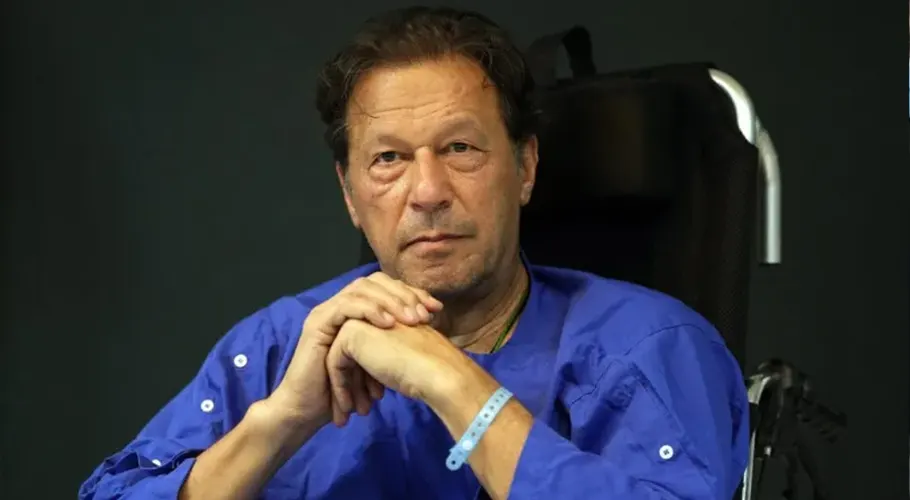


ISLAMABAD: The Incarcerated Pakistan Tehreek‑e‑Insaf founder Imran Khan is reported to have been given a third eye injection at the Pakistan Institute of Medical Sciences, media reports suggested, adding that the former prime minister was feeling well after the procedure.
Khan received three doses about a month apart after being moved from Adiala Jail to PIMS for the first treatment.
The first injection was reportedly administered on Jan. 24, as mentioned in a ministerial briefings on Jan. 25. The second dose was given in the early hours of Feb. 24, 2026 in an operating theatre at PIMS, under the joint supervision of PIMS and specialists from Al‑Shifa Eye Hospital. Media reports today confirmed that the third dose was completed at PIMS as part of the planned course.
The injections, being administered to Khan, are part of a standard remedy to treat right‑eye central retinal vein occlusion (CRVO), a condition in which a major retinal vein becomes blocked, causing blood and fluid to leak into the retina and impairing vision. The drugs, doctors say, block a protein that drives abnormal blood‑vessel growth and leakage, reducing retinal swelling and fluid accumulation, limiting macular damage and helping to stabilise or improve sight. Physicians involved said the three‑dose course was intended to stabilise Khan’s vision and minimise further retinal damage from the CRVO.
A statement to this regard was issued by PIMS which reads “Mr. Imran Ahmed Khan Niazi, 74, was brought to PIMS for third dose of anti-VEGF intra vitreal injection on March 23, 2026. Prior to the procedure he was examined by the opthalmologists and was found to be vitally stable. After obtaining his consentand under standard monitoring, adopting all standard precautionary measures and protocols in the operation theater, he was injected with third dose of intra vitreal injection of Anti VEGF under guidance of microscopy by the surgeons. The procedure was performed as a day care surgery. During the course of his stay, he remained vitally stable before, during and after the procedure and was discharged along with instructions for further care and follow up advice and documents.”
It may be added here that Khan’s sisters as well as his party leaders had been demanding transparent treatment, access for family and his personal doctors, and a transfer to Shifa International Hospital so his own physicians could examine and treat him; those demands have not been met. His family had said they as well as Khan’s lawyers were being denied visits and urged that their preferred medical team be allowed to assess him rather than only government‑appointed doctors.