

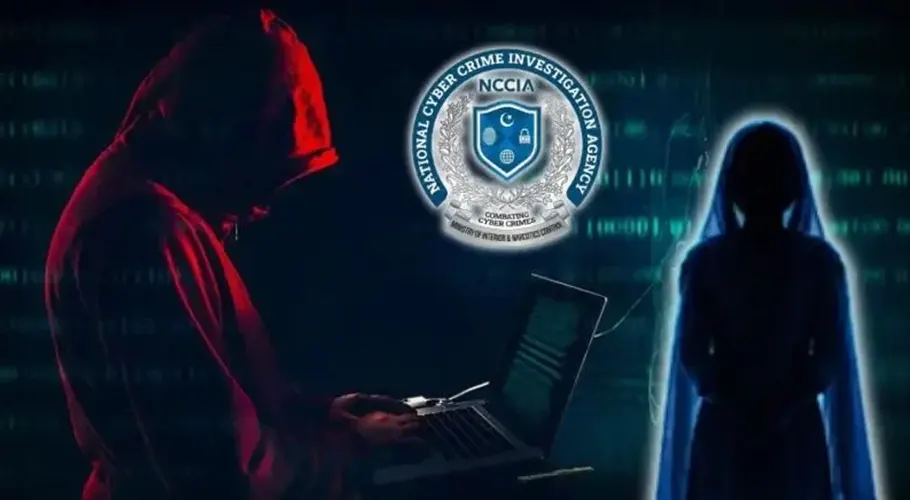
KARACHI: The National Cyber Crime Investigation Agency (NCCIA) in Karachi has intervened to protect a 13-year-old girl who was allegedly being influenced by a dangerous online network suspected of having links to the dark web, following information received from an international investigative agency.
According to officials, unidentified individuals associated with the suspected network were allegedly assigning the girl dangerous tasks, including instructions to harm a pet and subsequently inflict serious harm on herself.
NCCIA officials said the investigation team reached the girl before she could act on the instruction to harm herself. Following the intervention, her parents were informed of the situation, while two digital devices used by the girl were taken into custody for further investigation and forensic examination.
Authorities are investigating the suspicious online accounts that communicated with the girl, identifying possible local facilitators and determining whether other children in Pakistan may also have been targeted.
No arrest has been confirmed in connection with this specific case so far.
How Did the International Tip-Off Lead Investigators to the Girl?
According to NCCIA officials, the investigation began after information about suspicious online activity was received from a foreign investigative or intelligence agency.
NCCIA Additional Director Tariq Nawaz said the foreign agency provided information about the suspected online activity, along with an email address. Investigators subsequently examined the relevant Internet Protocol (IP) address to trace the connection and identify the person associated with the activity.
According to officials, the digital trail eventually led investigators to a minor who was allegedly under the influence of the suspected online group.
The foreign agency that provided the information has not been publicly identified.
NCCIA Karachi Deputy Director Shehzad said that investigative agencies in different countries exchange information to help protect children from online exploitation. He also referred to specialised software obtained from the United Kingdom that can generate alerts relating to suspected child sexual exploitation material.
However, the precise technical relationship between the international tip-off, the software mentioned by the official and the IP address used in this particular investigation has not been fully explained publicly.
What Dangerous Tasks Was the Girl Allegedly Assigned?
According to officials, the girl came into contact with a suspicious online group through social media. Communication allegedly continued through a messaging application, where she was instructed to participate in various activities.
Some initial accounts claimed that the first task involved poisoning a cat, followed by an instruction for the girl to seriously harm herself.
Officials said the investigation team reached the girl before she could act on the latter instruction.
However, the claim concerning the cat remains disputed. While some reports referred to an alleged task involving harm to a pet, NCCIA Deputy Director Shehzad Akbar reportedly denied that the girl had initially been instructed to kill a cat.
Further official clarification is therefore needed before this specific allegation can be treated as established fact.
Nevertheless, the available information indicates that the girl was allegedly receiving dangerous instructions from a suspicious online group and that the NCCIA intervened to protect her from potential harm.
Parents Had Noticed Changes in Her Behaviour
According to NCCIA officials, the girl’s parents were unaware of the nature of her online interactions and the potential risks associated with them.
After investigators contacted the family, the parents reportedly said they had noticed unusual changes in their daughter’s behaviour over several months.
The reported duration varies, with accounts referring to approximately three to four months in some instances and around six months in others.
The parents had reportedly observed changes in her routine and behaviour but had not understood the possible connection with her online activities.
Officials have stressed the importance of recognising behavioural changes and maintaining open communication with children. However, such changes alone do not establish that a child is being exploited online.
Two Digital Devices Taken into Custody; Psychological Support Provided
Following the intervention, the girl’s father was informed of the situation. Two digital devices used by the girl were subsequently taken into custody for further examination.
Investigators are examining the devices to establish the nature of her online communications, identify suspicious accounts and trace the individuals who may have contacted her.
NCCIA Additional Director Tariq Nawaz said the devices had been examined and retained for further forensic analysis. He also stated that psychological counselling had been provided to help the girl cope with the situation.
The parents were informed so they could support their daughter’s well-being and recovery.
A key aspect of the investigation is determining who controlled the suspicious accounts, how contact with the girl was established and whether the same individuals communicated with other children.
Were Other Children in Pakistan Also Targeted?
The NCCIA is investigating whether the suspected network may have targeted other children in Pakistan.
Officials are working to identify suspicious accounts, trace the individuals potentially associated with them and investigate the possible involvement of local facilitators.
However, the available information does not establish that other Pakistani children were affected in this specific case.
Separately, information has emerged about a broader investigation into a suspected network allegedly involving the exploitation of minors and the production of pornographic animated material. That investigation reportedly involves 42 suspects, including 12 juveniles.
However, the full details of that broader investigation and its precise connection to the case involving the 13-year-old girl have not been independently established. The two matters should therefore not be treated as a single case without further official confirmation.
What Is the Dark Web, and How Can It Pose Risks to Children?
The dark web is a part of the internet that generally requires specialised software or specific networks to access. Although it has legitimate uses, its anonymity can also be exploited by criminals to conceal their identities and engage in illegal activities.
Not every dangerous online interaction originates on the dark web. In the Karachi case, officials said the girl’s contact with the suspected group began through social media and subsequently continued through a messaging application.
Establishing whether the group was directly linked to the dark web requires further examination of its digital connections and other evidence.
According to NCCIA Deputy Director Shehzad, some online groups exploit children’s young age, social isolation or psychological vulnerabilities. In certain cases, children may be offered money, points or other incentives and encouraged to recruit additional children.
Such tactics can involve gradual manipulation, pressure, threats or instructions designed to draw children into harmful activities.
This makes it important for parents to pay attention not only to children’s online activity but also to their emotional well-being and social relationships.
How Can Parents Protect Children from Online Threats?
Parents can reduce the risk of online exploitation by maintaining open communication with their children and taking reasonable steps to support their online safety.