

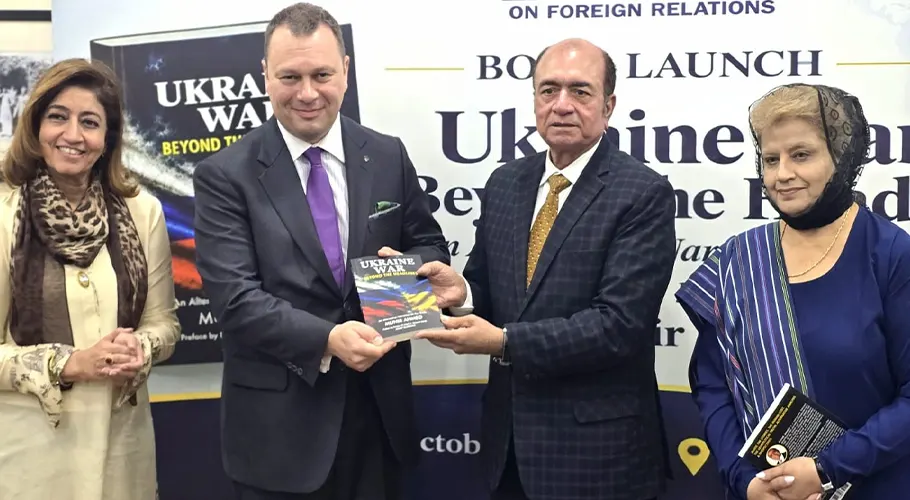
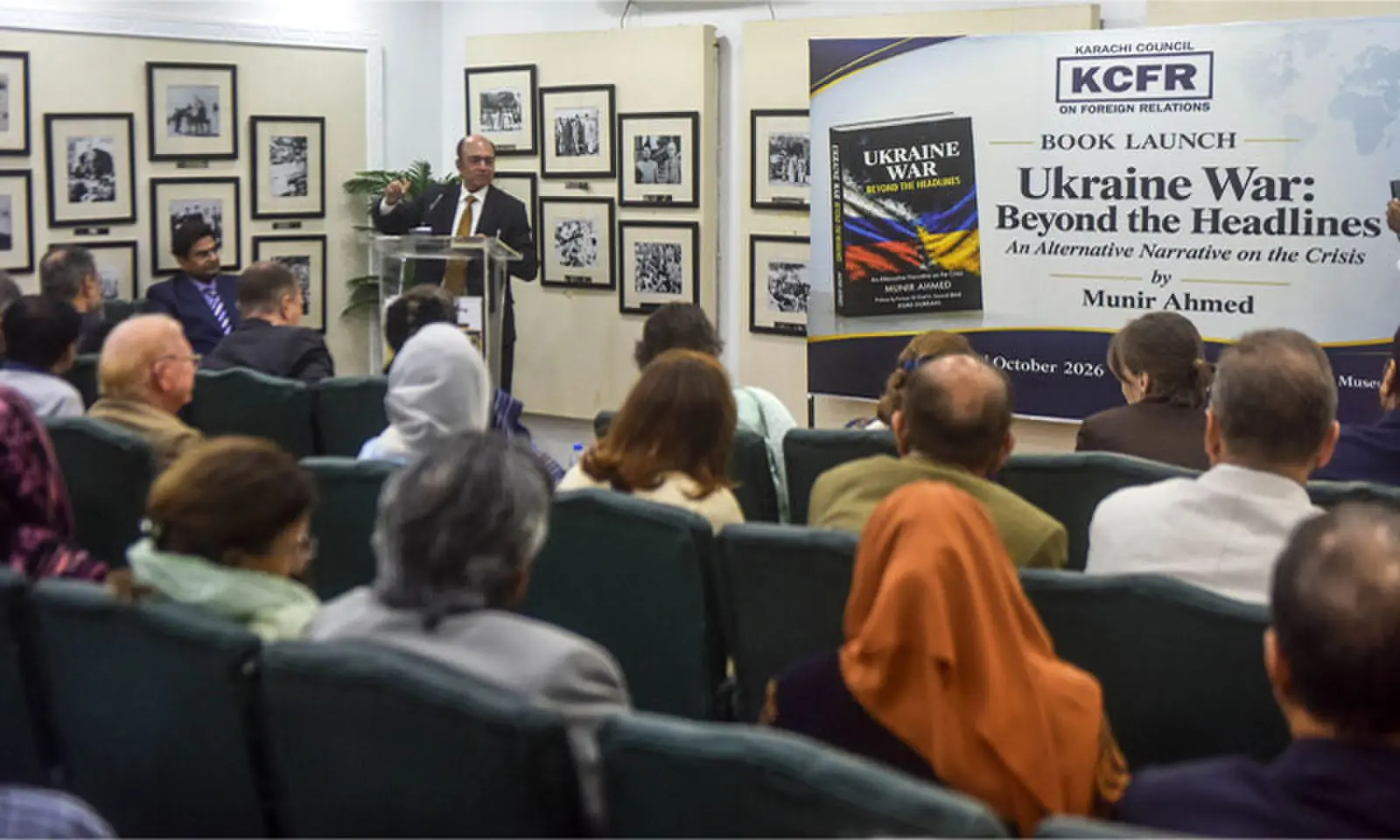
KARACHI: Speaking at the launching of a book “Ukraine War – Beyond the Headlines” by a Pakistani author and geopolitical analyst Munir ahmed, the experts and geopolitical commentators expressed that the prolonged Ukraine war has exposed serious weaknesses in the international security architecture, intensified geopolitical rivalries, undermined diplomatic mechanisms and imposed enormous human and economic costs far beyond the conflict zone. The international community must move beyond competing narratives, selective interpretations of international law and military confrontation to pursue meaningful diplomacy, peaceful coexistence and a more balanced global security order.
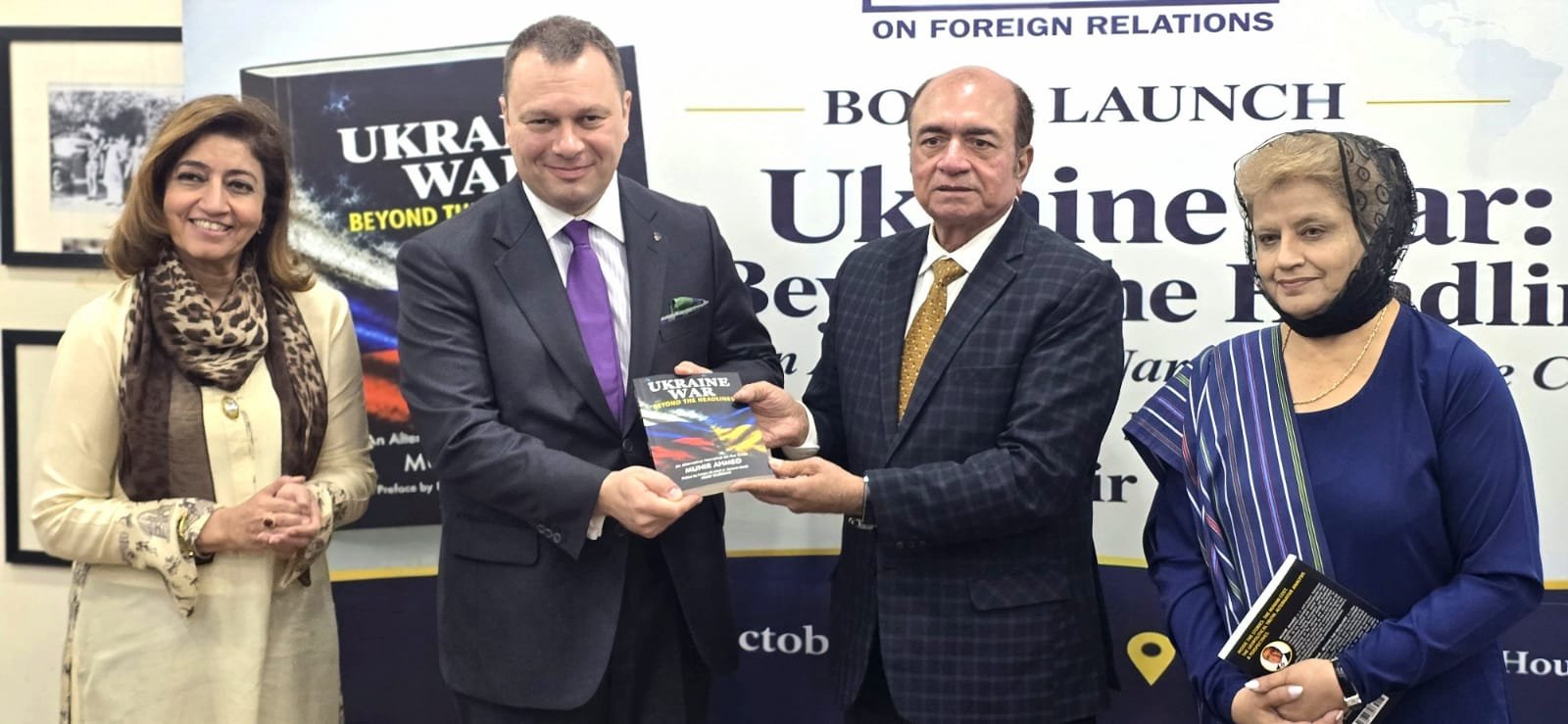
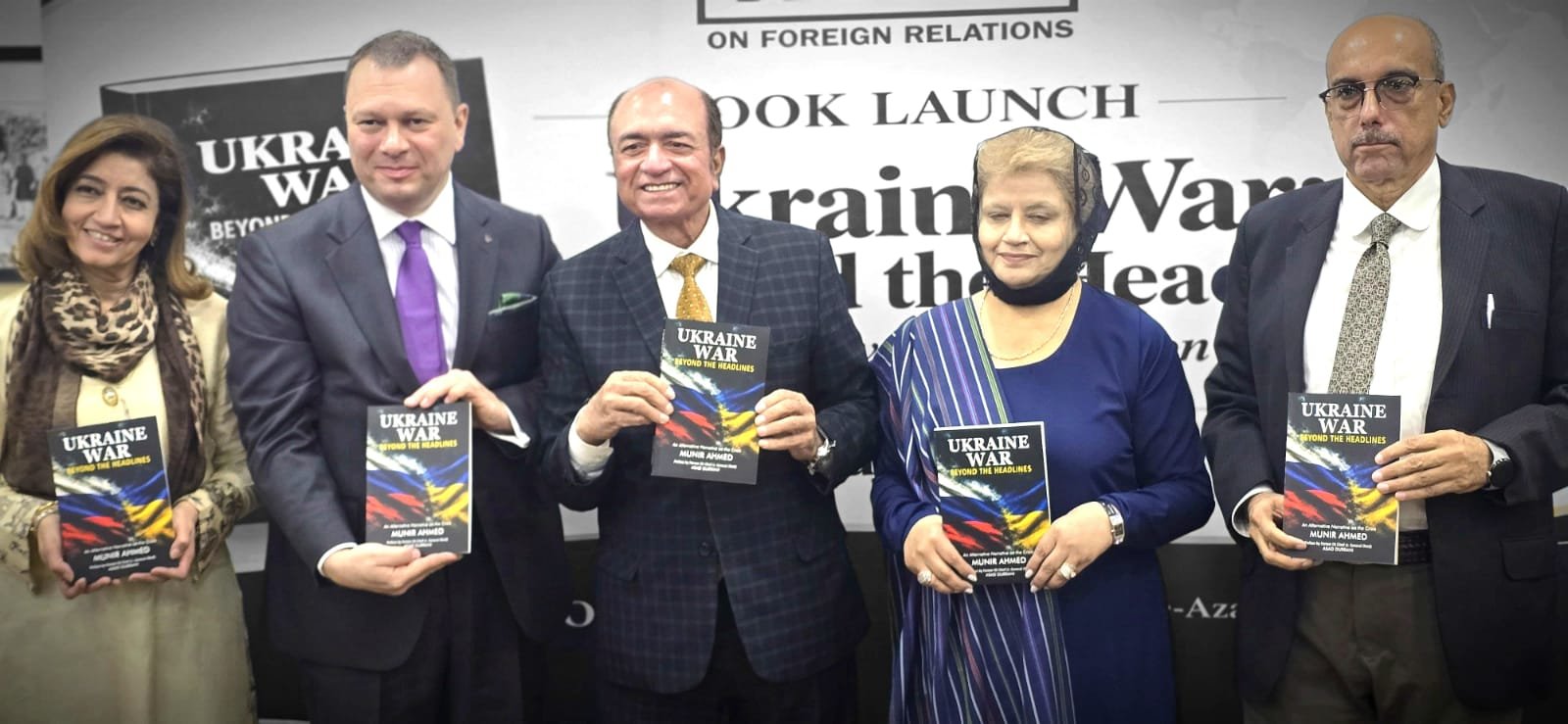
The book launching was organised by the Karachi Council on Foreign Relations (KCFR) at the Quaid-e-Azam House Museum on Friday evening. The guest speakers included the KCFR Chairperson Ms. Nadira Panjwani, HI, the Consul General of the Russian Federation in Karachi Mr. Andrey Viktorovich Fedorov, Senior Vice Chairperson of KCFR SI, Dr. Huma Baqai, educationist, political commentator and op-ed writer for The News International Dr. Naazir Mehmood, and Munir Ahmed, the author of “Ukraine War: Beyond the Headlines — An Alternative Narrative on the Crisis”.
The gathering brought together diplomats, foreign policy analysts, academics, journalists and members of civil society to examine the geopolitical dimensions of the Ukraine conflict, the competing strategic interests of major powers and the implications of the war for developing countries, particularly Pakistan.
Welcoming the participants, KCFR Chairperson Ms. Nadira Panjwani said that informed public debate on international conflicts was essential for developing a deeper understanding of the rapidly changing global order. The Ukraine conflict has demonstrated that wars are never confined to geographical boundaries. Their consequences reach economies, societies and communities thousands of miles away, she said, appreciating the author’s contribution to promoting geopolitical awareness and stressed that dialogue and diplomacy must remain central to resolving international disputes.
Andrey Viktorovich Fedorov, Consul General of the Russian Federation in Karachi, presented Russia’s perspective on the conflict and the wider European security environment. Lasting peace requires serious consideration of the security concerns of all parties. Sustainable stability cannot be achieved through confrontation alone; it requires diplomacy, mutual respect and a security framework that addresses the underlying causes of conflict, he said adding, the book is a rare opportunity to see the otherside of the conflict with the historic perspective, impact and consequences with the futuristic approach.
Dr. Naazir Mehmood said: “I congratulate the author for undertaking a task that is both intellectually demanding and politically sensitive: attempting to understand a war whose consequences reach far beyond the countries directly involved. Munir Ahmed’s book examines the conflict through strategic rivalries, diplomatic failures, economic consequences and competing interpretations of international security. Its distinctive contribution is the attempt to present these questions from a South Asian perspective. The title, Beyond the Headlines, is particularly appropriate. Headlines tell us what happened yesterday. Serious historical analysis attempts to explain why yesterday became possible.”
Dr. Huma Baqai, Senior Vice Chairperson of KCFR, observed that the Ukraine war had accelerated the transformation of global power relations and exposed the limitations of existing international institutions. The conflict is not simply a confrontation between Russia and Ukraine. It has become deeply intertwined with European security, NATO’s strategic posture, great-power competition and the evolving international order. The author has given his narrative contesting the Western mainstreamed point of view. The overlapping dimensions are essential for any meaningful discussion of peace, she said, the book provided an opportunity to stimulate wider discussion on the relationship between military power, international law, diplomacy and the media’s role in shaping public perceptions of war.
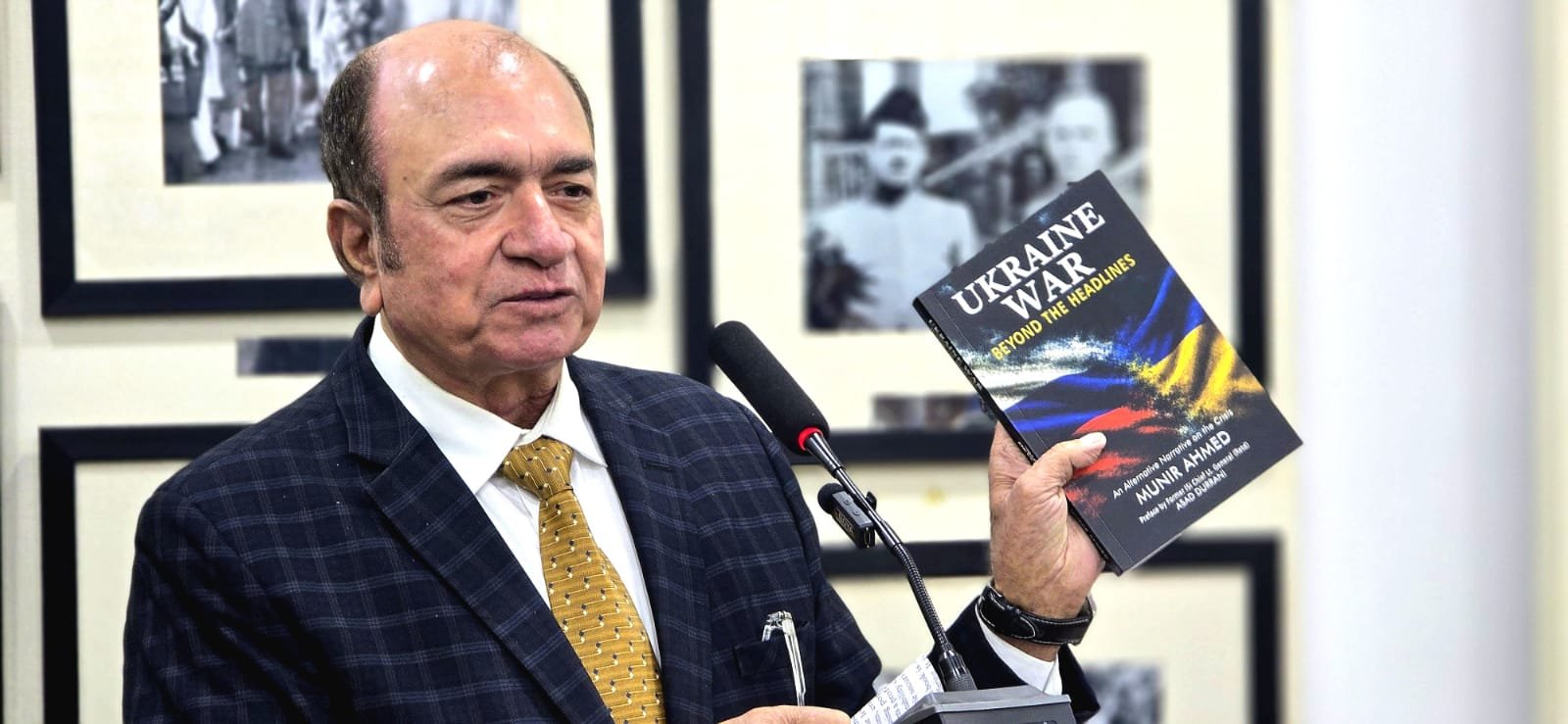
Addressing the gathering, Munir Ahmed, author of the book and Executive Director of Devcom-Pakistan, said the Ukraine conflict could not be fully understood without examining the historical evolution of European security, NATO’s eastward expansion, Russia’s security perceptions, Ukraine’s geopolitical position and the competing strategic ambitions of major powers.
“The tragedy of the Ukraine war is not limited to the devastation of cities, the loss of human lives and the displacement of millions, energy and food crisis, global inflation and increasing population below the poverty line. It also represents a profound failure of international diplomacy and the inability of major powers to construct a mutually acceptable security framework,” Ahmed said.
“The purpose of this book is neither to glorify war nor to justify human suffering. It is to challenge the monopoly of dominant geopolitical narratives and encourage readers to examine the crisis through historical context, strategic realities and perspectives frequently missing from mainstream international discourse,” he added.
Munir Ahmed said the war had reinforced geopolitical polarisation, disrupted global energy and food markets, increased military expenditure and diverted international attention and resources from urgent development challenges, including climate change, poverty reduction and sustainable development.
“For developing countries, the Ukraine conflict has demonstrated how geopolitical confrontation among powerful states can translate into inflation, energy insecurity, economic instability and additional burdens on vulnerable populations. Pakistan and other Global South countries must advocate diplomacy, strategic autonomy and peaceful conflict resolution,” he maintained.
He said the book examined the crisis beyond daily battlefield reporting, exploring the broader geopolitical contest, Western strategic calculations, Russia-China relations, economic sanctions, energy politics, information warfare and the prospects for a negotiated settlement.
The author also acknowledged Lt. Gen. (Retd.) Muhammad Asad Durrani, former Director General of Pakistan’s Inter-Services Intelligence (ISI), for contributing the preface to the book, adding that his strategic experience brought an important dimension to the publication.
Published internationally through Amazon marketplaces on October 6, 2026, Ukraine War: Beyond the Headlines — An Alternative Narrative on the Crisis is a 272-page English-language publication. Its Pakistan print edition has also been introduced to make the book more accessible to local readers, researchers, students and foreign policy enthusiasts.