
TEHRAN: Iran has been invited to join the Mecca Defence Agreement — the trilateral security pact signed by Pakistan, Saudi Arabia and Turkiye — according to a senior Iranian official, in what would mark a significant expansion of the region’s newest collective-defence framework.
Iran NVITED to Join the Mecca Defense Agreement
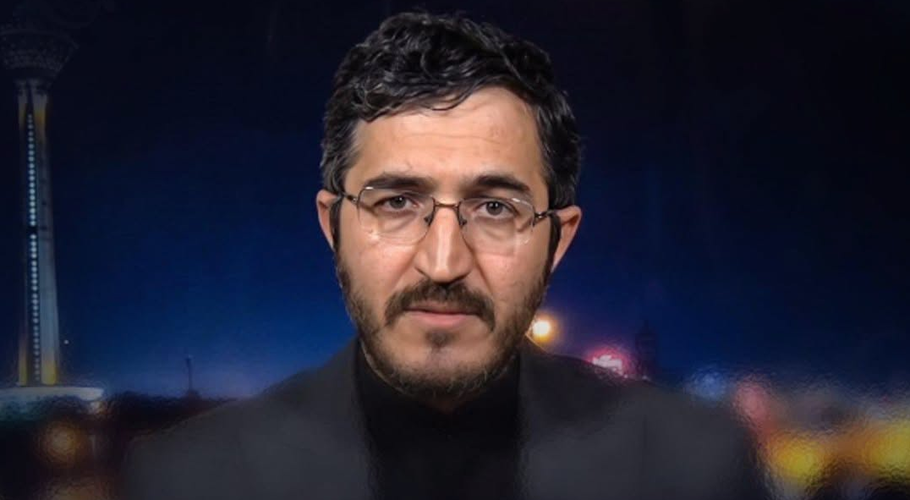
Mehdi Rahimi, the head of Iran’s Parliament’s news agency, told Al-Mayadeen that Iran has received an invitation to join the Mecca Defense Pact. pic.twitter.com/lGrrolw2F1
— Ryan Rozbiani (@RyanRozbiani) August 22, 2026
Mehdi Rahimi, head of the Iranian Parliament’s news agency, told Qatar-based Al-Mayadeen that Tehran had received an invitation to join the accord and that “the matter is under consideration.”
“Countries in the region are moving towards seeking a regional security umbrella, and this is a victory for Iran, because it has been calling for this for a long time,” Rahimi said.
He added that “whoever supports the United States in the economic war it is waging against Iran will pay the price,” a remark that underscored Tehran’s continuing friction with Washington even as it signalled openness to deeper regional integration.
As of now, no formal confirmation of an invitation has been issued by the governments of Saudi Arabia, Pakistan or Turkiye, and no treaty text naming Iran as a prospective signatory has been made public. Officials from the three founding states have previously said the pact remains open to any regional country willing to join.
‘A major transformation’ since the war, says Rezaee
Rahimi’s remarks came hours after Mohsen Rezaee, Secretary of Iran’s Supreme National Security Council, said the country’s defence and political posture had undergone a “major transformation since the second imposed war,” adding that Iran “is no longer the same country it was before the war” — just as, he said, Iranians’ perception of the United States has itself shifted.
What is the Mecca Defence Agreement?
The Mecca Joint Defence Agreement — also known simply as the Mecca Agreement — was signed on August 7, 2026, in the Saudi holy city of Mecca by Saudi Crown Prince and Prime Minister Mohammed bin Salman, Turkish President Recep Tayyip Erdogan and Pakistani Prime Minister Shehbaz Sharif.
Modelled on Article 5 of NATO’s founding treaty, the pact declares that an armed attack against any one of the three signatories “shall be regarded as an attack against them all.”
It was formally unveiled amid the fallout of the 2026 Iran war, after Saudi Arabia came under direct fire from Iranian drones and missiles, and as Gulf states voiced growing unease over the durability of the US security umbrella in the region.
The trilateral accord builds on the Strategic Mutual Defence Agreement signed between Pakistan and Saudi Arabia on September 17, 2025, in Riyadh — itself a landmark deal that formalised decades of Pakistani military cooperation with the kingdom.
Turkiye’s inclusion drew on its own separate, years-long defence relationship with both countries, including drone sales to Saudi Arabia and long-standing military exchanges with Pakistan.
Officials from all three states have repeatedly described the pact as “purely defensive,” insisting it is not aimed at any specific country and does not supersede existing bilateral or multilateral commitments.
Turkish Foreign Minister Hakan Fidan has said Egypt is a likely future member, while Pakistan’s Foreign Office has said the arrangement remains open to any nation willing to uphold its principles.
Iran’s cautious embrace
Tehran’s initial public reaction to the pact ranged from dismissive to cautiously welcoming. Iranian officials have variously downplayed the agreement as a “paper” arrangement while also framing the broader shift away from reliance on Washington as vindication of Iran’s long-standing call for a homegrown regional security order — a theme Rahimi echoed on Saturday in describing the development as a “victory” for Iran.
Whether Tehran’s reported invitation translates into formal membership remains unclear, and analysts caution that Iran’s rivalry with Saudi Arabia over Gulf influence, along with unresolved tensions with Pakistan over cross-border militancy, could complicate any expansion of the pact to include Iran.