

On July 23, 2026, the Office of the United States Trade Representative (USTR) dropped a hammer that should shatter more than just trade balances.
Ambassador Jamieson Greer, acting at President Trump’s direction, finalized Section 301 investigations targeting 60 economies for failing to prohibit imports produced with forced labor.
The verdict? A 10% tariff slapped on Pakistan, placing it in the same bracket as nations like Bangladesh, Cambodia, and Guatemala—hardly the company Islamabad imagines itself keeping when it trumpets its “leading role” in the Middle East.
But, as Middle East observers see it, here’s the gut punch: Pakistan is being penalized despite having a forced labor import prohibition on its books.
The USTR determined that Islamabad falls into a category of countries that “impose a forced labor import prohibition” but are still deemed insufficient in effective enforcement. Translation: Pakistan talks the talk, but Washington isn’t convinced it walks the walk.
The Domestic Theater vs. The Global Reality
Back home, the narrative has been intoxicatingly different. Pakistani leadership has spent years cultivating an image of indispensability in Middle Eastern geopolitics—portraying itself as the ummah’s shield, the stabilizing force, the bridge between the Arab world and the West.
The domestic media and political rhetoric have relentlessly reinforced this: Pakistan as the de facto leader of Muslim causes, the military powerhouse with strategic depth, the nation whose generals command respect in Riyadh, Doha, and Abu Dhabi.
And then there’s the Trump factor. The former and now-current President has never been shy about his admiration for Pakistan’s military establishment. He has publicly name-dropped his “favorite” Pakistani field marshals, waxed poetic about the “tremendous” cooperation in counterterrorism, and painted a picture of a bilateral relationship that transcends mere diplomacy.
For the Pakistani establishment, these weren’t just pleasantries—they were validation. Proof that the investment in Middle Eastern influence and personal diplomacy with Trump was paying dividends.
Until the tariff notice arrived.
Observers believe that the 10% penalty is a cold, bureaucratic rebuke that exposes the hollowness of that narrative.
Experts are of the opinion that all the military posturing, all the diplomatic glad-handing, all the boasts about being America’s indispensable Muslim ally—they couldn’t shield Pakistan from a trade action that Washington telegraphed months in advance.
The USTR initiated these investigations on March 12, 2026. There were two rounds of public hearings, over 2,100 public comments, and direct consultations with more than 45 governments.
Pakistan had every opportunity to strengthen its enforcement mechanisms, to demonstrate compliance, to avoid this categorization. It didn’t—or couldn’t.
The $Billions Question
The timing is nothing short of cruel. Pakistan is currently in the throes of seeking billions of dollars from the United States—not just in direct aid, but in trade concessions, investment guarantees, and debt relief mechanisms.
Islamabad’s economic team has been making the rounds in Washington, arguing that Pakistan is too important to fail, too strategic to abandon, too valuable as a regional counterweight to be left cash-strapped.
Yet here is the USTR, in the same breath, imposing tariffs that will directly erode Pakistan’s export competitiveness in the U.S. market.
The 10% duty applies to Pakistani goods that Washington determines are not effectively screened for forced labor inputs.
For a country whose textile industry—the backbone of its exports—relies heavily on informal labor networks and opaque supply chains, this isn’t just a tariff. It’s an indictment of the entire economic model.
The message from Washington is unmistakable: We will praise your generals in public, but we will penalize your economy in practice.
The personal chemistry between leaders is not a shield against systemic non-compliance. Pakistan’s strategic importance does not grant it immunity from trade rules that apply to Guatemala or Honduras.
From Gulf Missiles to Pakistani Kitchens: The Inflation Bomb
But the true thought-provocation lies not in the tariff itself, but in its cascading consequences—consequences that tie the distant thunder of Middle Eastern wars directly to the emptying pockets of Pakistani citizens.
Consider the context: The Middle East is on fire. U.S. strikes on Iranian nuclear and military facilities have triggered retaliatory missile barrages from Tehran targeting Gulf states—Saudi Arabia, the UAE, Qatar. The Strait of Hormuz is a powder keg. Oil prices, already volatile, are being pushed upward by every explosion in the Gulf.
Pakistan, which imports the vast majority of its petroleum products, is uniquely vulnerable to this energy shock.
Every missile that hits a Saudi refinery, every drone that strikes an Emirati tanker, every Iranian retaliation that disrupts Gulf supply chains—it all translates, with brutal mathematical precision, into higher import bills for Islamabad.
The government, already struggling with a crippling current account deficit, has no choice but to pass these costs to consumers.
And now, the U.S. adds a 10% tariff on top. The result? A pincer movement on the Pakistani economy.
On one flank, the Middle East war drives up the cost of energy imports, inflating transportation, manufacturing, and electricity costs.
On the other flank, U.S. tariffs shrink export revenues, reducing the foreign exchange needed to pay for those same energy imports. The rupee comes under pressure.
The fiscal deficit widens. And the government, boxed in by IMF conditionalities and dwindling reserves, does the only thing it can: raise petroleum prices. Again. And again.
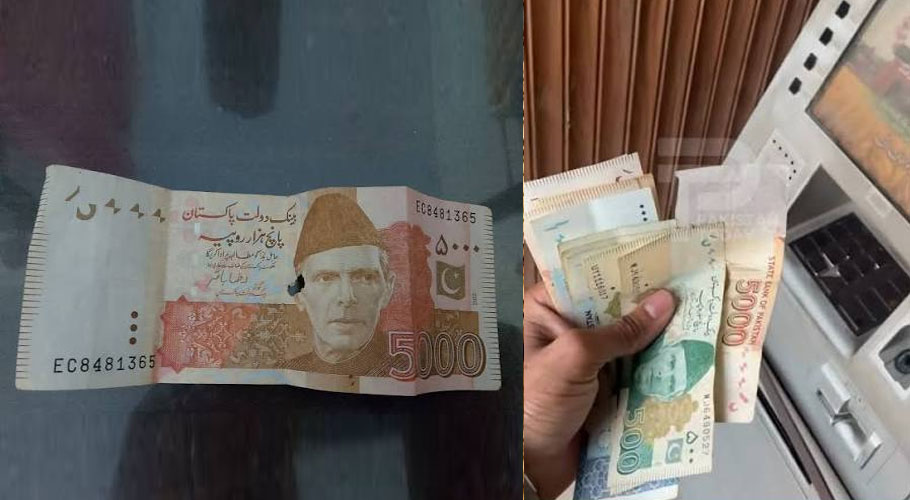
Experts say this is not abstract macroeconomics. This is the price of bread doubling. This is the motorcycle ride to work costing 20% more. This is the LPG cylinder that cooks dinner becoming a monthly luxury. The war in the Middle East—fought with missiles and bombs over Gulf skies—is landing, with explosive force, on Pakistani dinner tables in the shape of runaway inflation.
The Uncomfortable Truth
Again, Middle East observers are of the opinion that Pakistan’s leadership wants to have it both ways.
It wants to project power in the Middle East, to be seen as the region’s military guardian, to bask in the glow of American presidential compliments. But it does not want to pay the price of building a transparent, enforceable economic system that meets international standards. It wants billions in American support, but resists the structural reforms that would make that support sustainable.
The USTR’s tariff action, experts say, is a wake-up call, but it may be too late. The Middle East war is already transmitting its costs into Pakistan’s economy.
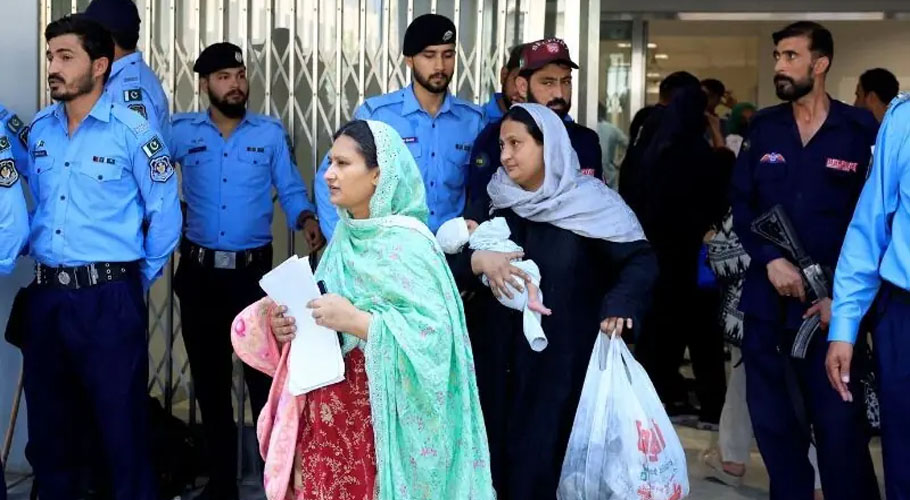
The 10% tariff will only accelerate the pain. And the Pakistani citizen—who never asked for regional leadership, who never voted for Middle Eastern adventurism, who simply wants affordable fuel and stable prices—will bear the burden.
The missiles falling in the Gulf are not just destroying Iranian and Saudi infrastructure. They are destroying Pakistani purchasing power.
The bombs dropped by U.S. forces on Iran are not just targeting nuclear facilities. They are targeting the Pakistani rupee. And the tariff imposed by a friendly American administration—one that supposedly admires Pakistan’s generals—is not just a trade penalty.
It is a reminder that in the ruthless calculus of global power, boasts are cheap, but compliance is costly.
As Middle East observers put it, ‘Pakistan wanted to be a player. It is now learning that players pay’.