
NEW DELHI: Activist and education reformer Sonam Wangchuk on Friday ended his 26‑day indefinite hunger strike in support of the youth‑led “Cockroach Janta Party” (CJP) protests, after receiving assurances from the federal government that his core demands on exam integrity and accountability would be addressed.
The fast, which began on June 28 at Delhi’s Jantar Mantar and later saw Wangchuk shifted to Medanta Hospital in Gurugram for medical observation, had become a rallying point for one of India’s largest student‑led agitations in recent years over repeated paper leaks in competitive examinations, including the NEET medical entrance test that was cancelled and re‑held.
Ministers’ intervention and government assurances
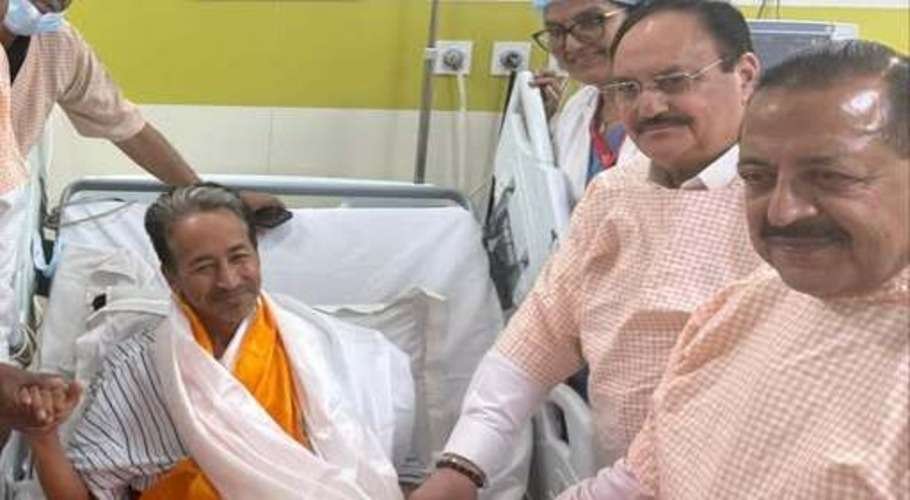
Wangchuk broke his fast late on Thursday night in the presence of Union Ministers JP Nadda and Jitendra Singh, who conveyed the government’s position after what he described as “long negotiations on various conditions”. In a post on X, Wangchuk said dozens of MPs from different parties had also visited him or signed letters urging him to end the strike.
END OF HUNGER… BEGINNING OF ACCOUNTABILITY…!
Sonam Wangchuk ends his fast after 26 days upon getting assurance from the government and members of parliament of all political parties that the issue of accountability in the failing examination system will be discussed on the… pic.twitter.com/0C9YX5VlsL— Sonam Wangchuk (@Wangchuk66) July 24, 2026
According to multiple Indian media reports, the assurances conveyed to Wangchuk included:
- That no cases would be registered against people who protested peacefully at Jantar Mantar and during the July 20 march to Parliament.
- That Parliament would hold discussions on exam paper leaks and broader education and examination reforms.
- That the government was “positively considering” suitable compensation for families of students who died by suicide in the wake of the recent NEET paper‑ leak fallout.
Some reports also noted that Prime Minister Narendra Modi, in a late‑night video address, indicated a draft law to deal with exam‑related offences was ready and would be taken up by the Union Cabinet, though details of the proposed legislation were not immediately disclosed.
Why ministers had to step in
The urgency behind the high‑level ministerial intervention reflected both the scale of the protests and the risk of escalation.
Wangchuk warned of “possible violence in the country” if the standoff continued, a concern echoed by several political leaders who appealed to him to end the fast.
The CJP movement, which began as a demand for the resignation of Union Education Minister Dharmendra Pradhan over alleged irregularities in entrance exams, has evolved into a broader Gen Z‑led agitation against corruption, joblessness and perceived mismanagement of the education system.
Police earlier this week used tear gas and batons to disperse marchers attempting to reach Parliament, underlining the sensitivity of the situation.
With the activist’s health deteriorating and the protest gaining national and international attention, the government faced growing pressure to de‑escalate the crisis and offer a political off‑ramp without conceding the immediate demand for the minister’s resignation.
Protest continues despite end of fast
While welcoming Wangchuk’s decision, CJP founder Abhijeet Dipke said the group’s peaceful protest at Jantar Mantar would continue until Pradhan resigned.
Dipke thanked Wangchuk for his “extraordinary courage and sacrifice” but reiterated that the movement’s core demand remained unchanged.
Wangchuk, for his part, urged supporters to remain vigilant against any violence and said he would explain the conditions of his fast’s end in detail in a separate video.
Significance of the hunger strike
Observers believe Wangchuk’s 26‑day fast amplified a diffuse student agitation into a nationally visible confrontation between a respected education reformer and the federal establishment.
It forced the government to engage directly with protest leaders, commit to parliamentary discussions on exam integrity, and signal legislative action on exam‑related offences, even as it sought to contain the political fallout over the education minister’s position.
The episode also underscored the growing assertiveness of India’s youth in demanding accountability over high‑stakes examinations that determine access to medical, engineering and other professional courses, and highlighted the political risks for the ruling establishment when such exams are perceived as compromised.