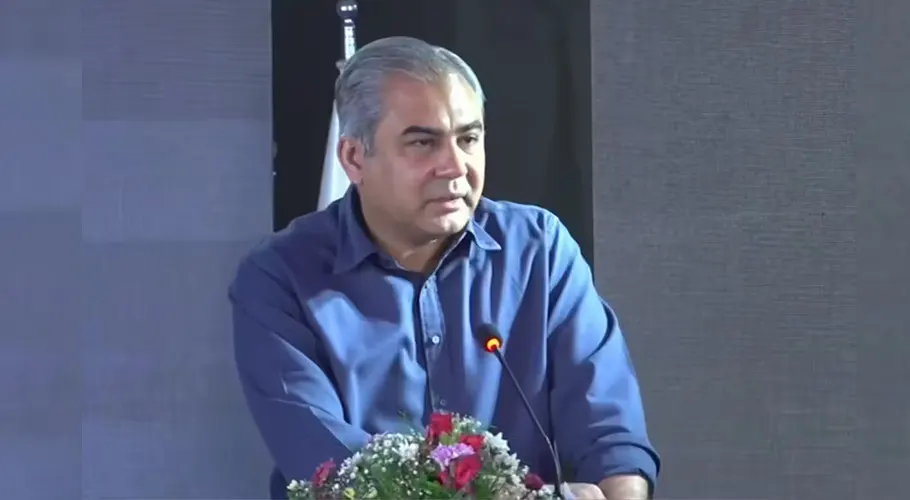


Prime Minister Shehbaz Sharif addresed the nation tonight (Monday), providing an update on recent developments amid global and regional crises.
Addressing the nation, the premier said the entire region had been gripped by conflict and stressed that Pakistan was pursuing diplomatic efforts to help defuse the crisis.
“The entire region is currently in a state of war,” the PM said, adding that Pakistan was making every effort through diplomatic channels to help resolve the situation.
The prime minister also highlighted the security challenges faced by Pakistan on its western borders, saying the country continued to confront terrorism.
The PM also condemned the attacks on Iran, which he said resulted in the assassination of Iran’s Supreme Leader Ayatollah Ali Khamenei. At the same time, he also condemned the retaliatory attacks on friendly Gulf countries
The prime minister said he had spoken with leaders of friendly countries to discuss the evolving situation. “I have held detailed discussions with the leaders of brotherly countries and conveyed that Pakistan stands shoulder to shoulder with them in this difficult time,” he said.
He said the global oil market had reacted sharply to the conflict.
“The price of crude oil in the international market has suddenly jumped from around $60 to more than $100 per barrel,” he said, adding that daily life in Pakistan depended heavily on oil and gas supplies coming from the Gulf region.
The prime minister said the government had taken difficult economic and administrative decisions to manage the situation and reduce the impact of the energy crisis.
“We have taken difficult decisions to reduce the energy crisis and stabilise the economy despite challenging circumstances,” he said.
The premier acknowledged that the recent increase in fuel prices was a tough decision. “The increase in petroleum prices was a difficult decision taken with a heavy heart,” he said.
“My mind told me that there was no option but to increase fuel prices, while my heart worried that it could place a burden on the poor,” the prime minister added.
Austerity measures:
Fuel allocations for government department vehicles will be cut by 50 per cent, with ambulances exempted.
60 per cent of government vehicles will be grounded.
Cabinet ministers, advisers, and assistants will voluntarily forego two months’ salaries and allowances, while members of parliament will face a 25 per cent salary reduction.
All departmental expenditures will be reduced by 20 per cent, and office procurement of goods has been completely suspended.
Officers at Grade 20 and above will contribute two days’ salary to public relief efforts.
All foreign trips by government officials, advisers, federal ministers, and governors are suspended.
Government dinners and Iftar parties are banned, and official events will be held at government venues instead of hotels.
Except for essential services, both public and private sector offices will operate with 50 per cent staff.
Offices will open four days a week, with one additional weekly holiday, excluding banks.
All schools will immediately observe a two-week holiday, with online classes being introduced for all educational institutions.