
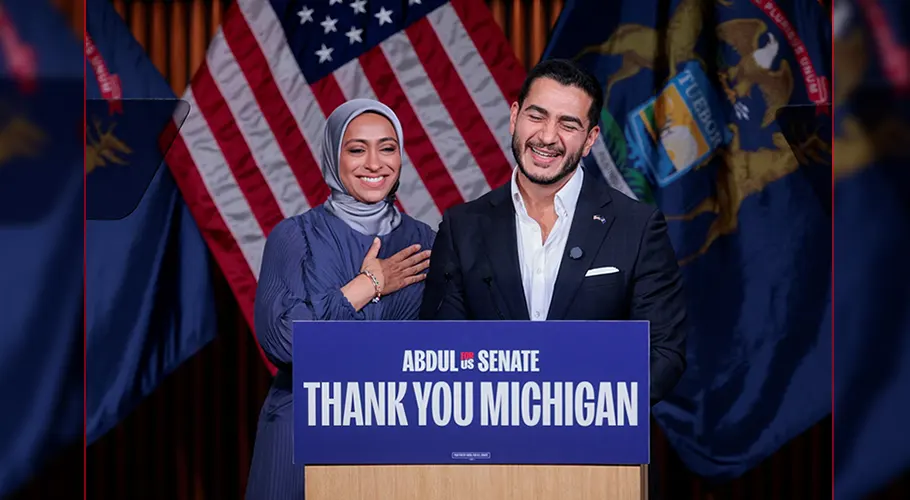
WASHINGTON: Democrat Abdul El-Sayed, 42, has defeated Republican candidate Mike Rogers in Michigan’s closely watched US Senate race, making history as the first Muslim elected to the United States Senate.
The son of Egyptian immigrants, El-Sayed’s victory marks a significant milestone in American political history and represents a major breakthrough for the progressive wing of the Democratic Party.
A former public health official, El-Sayed had never previously held elected office. Eight years ago, he suffered a significant defeat in Michigan’s Democratic gubernatorial primary. However, he continued his political journey and eventually secured a historic victory in the Senate race.
Healthcare, Rising Costs and Corporate Influence at the Centre of His Campaign
During his campaign, El-Sayed focused on tackling the rising cost of living, reducing financial pressure on working families and limiting the influence of major corporations in American politics.
A central proposal in his platform was Medicare for All, a government-backed universal healthcare programme aimed at replacing the existing mix of private and public health insurance with a single-payer system.
Criticism of Israel Becomes a Major Election Issue
El-Sayed’s outspoken criticism of Israel emerged as one of the most contentious issues during the campaign.
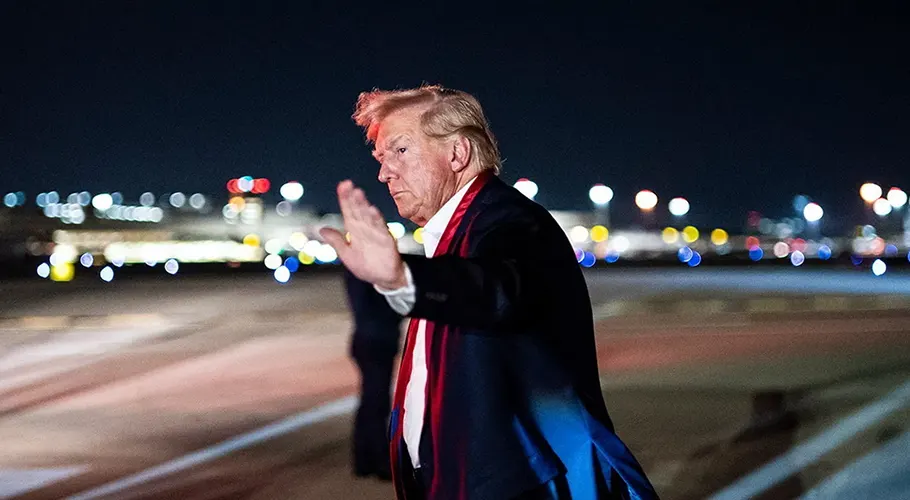
President Donald Trump and several Republican figures raised allegations of alleged links between El-Sayed and extremist organisations. However, no credible evidence was presented to substantiate claims of terrorist ties.
Democrats criticised the attacks, describing them as Islamophobic and politically motivated.
Divisions Within the Democratic Party
El-Sayed also faced a challenging battle within his own party during the Democratic primary, where he competed against establishment-backed candidate Haley Stevens.
The primary attracted nearly $60 million in outside spending, including almost $30 million spent by the pro-Israel lobbying group AIPAC in opposition to El-Sayed.
The divisions continued after the primary, with Stevens endorsing Republican candidate Mike Rogers on November 1, citing concerns about El-Sayed’s positions and his engagement with the Jewish community.
Support from Obama, Harris and Progressive Leaders
Winning support among Black voters in Detroit and Jewish voters in surrounding suburbs was another significant challenge for El-Sayed.
Former President Barack Obama and former Vice President Kamala Harris joined him on the campaign trail in Detroit to help mobilise voters.
He also received backing from prominent progressive figures, including Senator Bernie Sanders and Congresswoman Alexandria Ocasio-Cortez.
His victory is expected to strengthen the progressive movement’s argument ahead of the 2028 presidential election that its policy agenda can attract support in highly competitive states.
Trump’s Endorsement Fails to Secure Victory for Mike Rogers
Republican candidate Mike Rogers, a former congressman and former chairman of the House Intelligence Committee, had also contested Michigan’s Senate seat in 2024, when he narrowly lost to Democrat Elissa Slotkin.
This time, Rogers received strong backing from President Trump and national Republican leaders. However, concerns over rising fuel prices, the war with Iran and the administration’s trade policies created additional challenges for his campaign.
Rogers also attempted to broaden his appeal among Democratic and independent voters, particularly Black and Jewish communities.
During the closing weeks of the campaign, he publicly broke with Trump over the war with Iran, arguing that the conflict needed to end quickly to ease economic pressure on businesses and consumers.
A Historic Milestone Ahead of the 2028 Presidential Election
El-Sayed’s victory represents more than a Senate seat for the Democratic Party. It marks a historic breakthrough for Muslim representation in the US Congress and strengthens the position of progressive Democrats within the party.
His success is also likely to feature prominently in discussions about the direction of the Democratic Party as it prepares for the 2028 presidential election.