
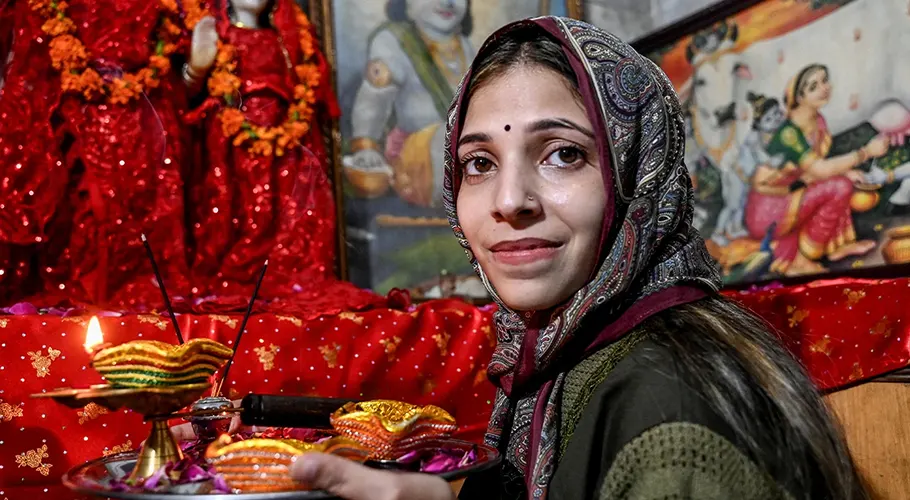
KARACHI: The Hindu community in Pakistan and across the world is celebrating Diwali, one of its most significant religious festivals, with traditional enthusiasm and religious devotion.
Homes, temples and streets are being decorated with colourful lights and traditional earthen lamps, while families are celebrating the occasion by exchanging sweets and gifts and gathering with loved ones.
Also known as Deepavali, Diwali literally means a row of lamps. The ancient Hindu festival symbolises the triumph of light over darkness, good over evil and hope over despair. It is observed during the Hindu lunar month of Kartik, usually falling in October or November.
Preparations for Diwali typically begin with families cleaning and decorating their homes. On the main night of the festival, earthen lamps, known as diyas, are lit in homes and places of worship. Devotees also offer prayers to Lakshmi, the Hindu goddess of wealth and prosperity. In some regions, celebrations include fireworks and special religious and cultural events.
In various parts of India, Diwali festivities traditionally span five days. These include Dhanteras, Naraka Chaturdashi, Diwali, Govardhan Puja and Bhai Dooj. Each day carries its own religious and cultural significance.
Diwali is also significant for communities beyond Hinduism. Jains observe the occasion in connection with Lord Mahavira’s attainment of nirvana, while Sikhs celebrate it as Bandi Chhor Divas, commemorating the release of Guru Hargobind Sahib.
Besides India, Diwali is celebrated with enthusiasm in several countries, including Nepal, Mauritius, Singapore, Malaysia, Sri Lanka and Fiji.
The festival conveys a message of love, hope, prosperity, mutual respect and the victory of goodness, bringing families and communities together in a spirit of joy and harmony.