
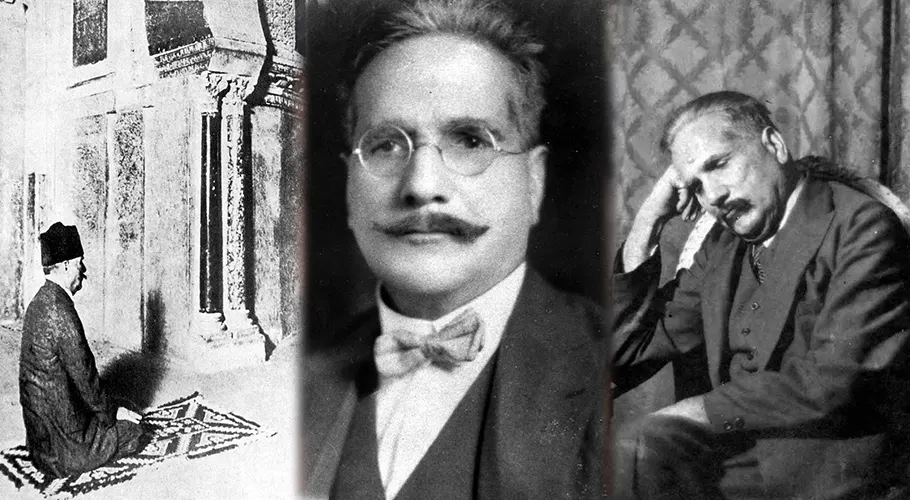
KARACHI: Dr. Allama Muhammad Iqbal, widely known as the Poet of the East, remains one of the most influential intellectual, literary and philosophical figures in the history of the Indian subcontinent. Through his poetry and philosophical thought, he inspired Muslims with the ideals of selfhood, dignity, unity and awakening. His vision also provided an important intellectual foundation for the idea of Pakistan.
Allama Muhammad Iqbal was born on November 9, 1877, in Sialkot, into a family of Kashmiri ancestry. He received his early education in his hometown, where he also studied Arabic and Persian. He later attended Government College Lahore, earning a master’s degree in philosophy before entering the teaching profession. He also served as a teacher of Arabic at Oriental College Lahore.
Higher Education in Europe and Intellectual Growth
In 1905, Iqbal travelled to Europe to pursue higher education. He studied at Trinity College, Cambridge, and subsequently qualified as a barrister through Lincoln’s Inn in London. He later earned a PhD in Philosophy from the University of Munich in Germany.
His stay in Europe provided him with an opportunity to explore Western philosophy and civilisation, broadening his intellectual horizons and enriching his philosophical outlook.
After returning to Lahore in 1908, he began practising law. However, his primary interests remained focused on poetry, philosophy, politics and intellectual pursuits.
Poetry That Inspired Self-Confidence and Awakening
Iqbal’s poetry carries powerful messages of self-respect, determination, courage, ambition and continuous struggle. His literary works encouraged younger generations to recognise their potential and strive for higher goals.
His renowned poetry collections include Bang-e-Dra, Bal-e-Jibril, Zarb-e-Kalim, Asrar-e-Khudi, Rumuz-e-Bekhudi, Payam-e-Mashriq and Armaghan-e-Hijaz.
His famous poem Lab Pe Aati Hai Dua Ban Ke Tamanna Meri remains particularly popular among children. The philosophy and spiritual teachings of Maulana Jalaluddin Rumi also had a profound influence on Iqbal’s intellectual development.
Intellectual Foundations of the Pakistan Movement
Allama Iqbal holds a significant place among the intellectual figures associated with the Pakistan Movement.
In his historic presidential address at the All-India Muslim League’s annual session in Allahabad in 1930, he proposed the consolidation of Muslim-majority regions, including Punjab, Sindh, Balochistan and the North-West Frontier Province, into a single political unit.
He also maintained correspondence with Quaid-e-Azam Muhammad Ali Jinnah, sharing his views on the political future of Muslims and the role of the Muslim League. His ideas helped strengthen the demand for a distinct political identity and greater autonomy for Muslims in the subcontinent.
A Legacy That Transcends Borders
Allama Iqbal passed away in Lahore on April 21, 1938, but his intellectual and literary legacy continues to inspire people across the world.
In Pakistan, he is honoured with titles such as the Poet of the East, Hakeem-ul-Ummat and Muffakir-e-Pakistan. In Iran, he is widely known as Iqbal Lahori, while his Persian poetry enjoys considerable recognition in international literary circles.
His mausoleum is located in Hazuri Bagh, near the Badshahi Mosque in Lahore. Every year, November 9 is observed as Iqbal Day in Pakistan to commemorate his life, teachings and intellectual contributions.
Iqbal’s message of selfhood, unity, knowledge and perseverance remains relevant today, making his poetry and philosophy a lasting source of inspiration for generations to come.