
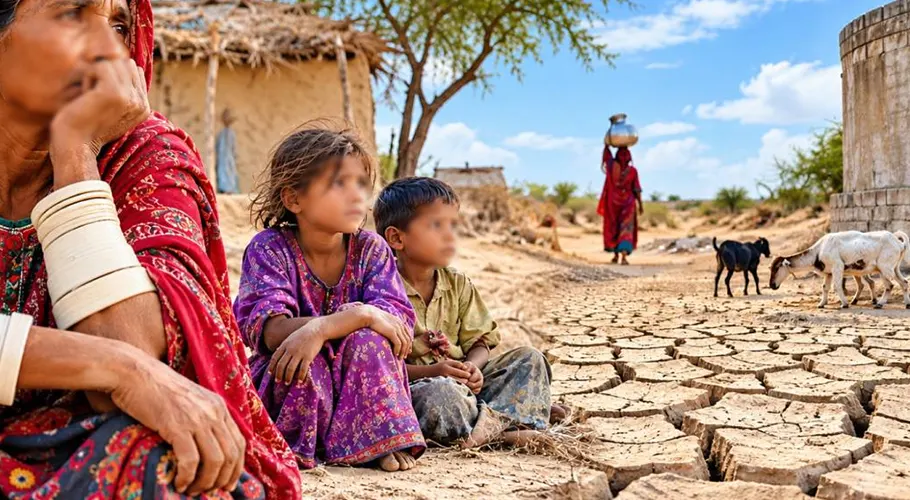
KARACHI: The worsening drought situation in Sindh has severely affected agriculture and livestock in Tharparkar, prompting Chief Minister Murad Ali Shah to decide to declare the district disaster-hit and direct relevant authorities to initiate immediate relief measures.
During a meeting chaired by the chief minister, officials briefed participants that inadequate rainfall across all seven talukas of Tharparkar had resulted in the destruction or failure of 85 to 90 per cent of crops. According to the Agriculture Extension Department, approximately 90 per cent of the crops have been damaged.
Officials reported that rainfall in different parts of the district ranged from just 1 to 36 millimetres during September 2026. Uneven rainfall distribution caused crops and natural grass to dry up before reaching maturity, creating serious difficulties for local communities and livestock owners.
Orders Issued to Restore Water Supply and RO Plants
Murad Ali Shah directed the relevant authorities to ensure an uninterrupted supply of clean drinking water to affected communities. He also ordered the immediate repair and restoration of non-functional reverse osmosis (RO) plants and other existing water supply facilities.
The chief minister instructed the Sindh chief secretary to develop a long-term plan for supplying water from Naukot to Mithi and assess the feasibility of laying a water pipeline along the route.
Measures Planned to Protect Livestock
The meeting also discussed measures to protect livestock affected by the drought. The chief minister directed the chief secretary to prepare practical recommendations to safeguard animals and minimise potential losses.
Murad Ali Shah assured residents that the provincial government would not abandon the people of Tharparkar during this difficult period and would extend all possible assistance.
He further emphasised the need for continuous monitoring of relief operations, stressing that drinking water supplies, livestock protection and assistance to drought-affected families must remain the government’s top priorities.