
ISLAMABAD: The inquiry report into the August 26 fire at the MCH Nursery of the Pakistan Institute of Medical Sciences (PIMS) has been released on the directions of Prime Minister Shehbaz Sharif, identifying the likely cause of the blaze, serious fire-safety deficiencies and institutional failures linked to the deaths of 14 newborns.
According to the report, 15 newborns were receiving treatment in the nursery when the fire broke out. Fourteen of them died, while one was rescued safely. Investigators reviewed forensic evidence, CCTV footage, call records, engineering and maintenance documents, duty records and witness statements as part of the inquiry.
Electrical Fault Identified as Most Likely Cause
The inquiry committee said technical evidence from the National Forensic Agency points to an electrical cable near AC Unit No. 2 as the most likely point of origin of the fire.
The report identified excessive localized electrical heating, overcurrent, high-resistance connections or another localized electrical fault as possible contributing factors that may have damaged the cable insulation and ignited nearby combustible material.
The findings did not support theories of arson, multiple points of ignition, an external electrical fault attributed to IESCO, or oxygen leakage as the cause of the fire. There was also no evidence indicating that an incubator or warmer had caused the blaze.
Frontline Staff Not Blamed for the Deaths
The inquiry found that nursery staff responded within seconds of the fire becoming apparent and attempted to rescue the newborns.
Charge Nurse Nasreen Akhtar, security guard Maria Saleem and staff nurse Razia Noreen took immediate action. Razia Noreen successfully rescued one newborn and attempted to re-enter the nursery.
The report said the available evidence does not support the allegation that frontline staff abandoned the babies. It noted that several staff members acted promptly and courageously despite the rapidly deteriorating conditions.
Serious Fire-Safety Gaps Exposed
The inquiry identified major shortcomings in the nursery’s fire-safety arrangements. Investigators found no record of formally approved, trained and regularly rehearsed standard operating procedures for evacuating newborns during an emergency.
The presence of an automatic smoke detection system, fire alarm or sprinkler system in the affected area could also not be established.
The nursery, which had a capacity of 10 beds, was treating 15 critically ill newborns at the time. Several were dependent on oxygen or respiratory support, making rapid evacuation extremely difficult. Limited staffing and inadequate evacuation resources further complicated the rescue effort.
Delay in External Assistance Raises Concerns
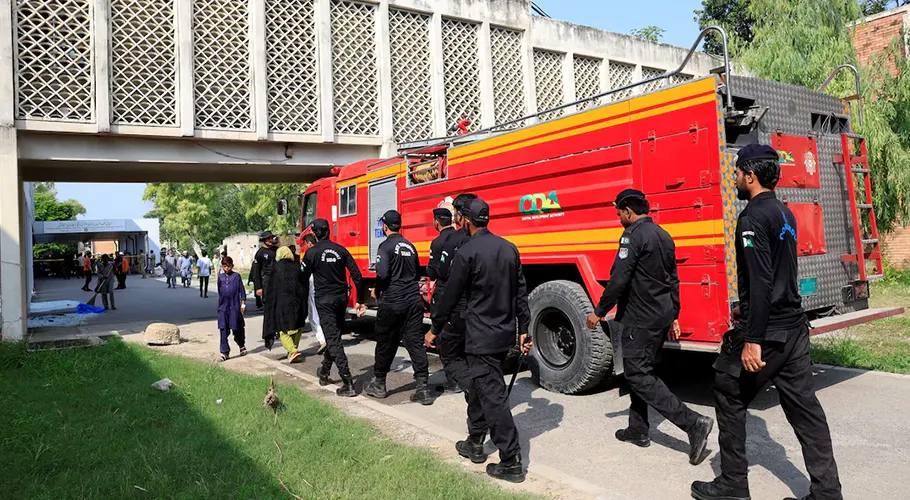
According to the report, the fire had become clearly visible at around 6:38 a.m. External assistance was notified at 6:54 a.m., dispatched at 6:55 a.m., and reached the site at approximately 7:01 a.m.
The committee termed the gap between the apparent outbreak of the fire and the activation of external assistance a serious concern.
It said PIMS could not demonstrate the existence of an effective Incident Command System capable of immediately activating alarms, external notification, evacuation, hazard control, access management and coordinated emergency response.
Institutional Failure Highlighted
The inquiry concluded that the tragedy was not caused by a single safety failure. Rather, multiple weaknesses—including inadequate fire-safety measures, failure to act on previous warnings, limited evacuation capacity and weaknesses in emergency preparedness—combined to produce catastrophic consequences.
The report noted that previous correspondence from the Capital Development Authority (CDA) and recommendations issued by the Federal Ombudsman had already highlighted fire-safety deficiencies. PIMS had also acknowledged the outdated condition of its fire-safety infrastructure in 2025.
According to the committee, the failure to address known risks in a timely and effective manner amounted to a systemic and institutional failure.
Further Criminal Investigation Recommended
The inquiry did not establish a criminal offence against any specific individual on the basis of the evidence currently available. However, it recommended further investigation into four areas.
These include possible negligence in the electrical installation or maintenance of AC Unit No. 2, potentially obstructed emergency routes, failure to act despite previous warnings, and any culpable delay in requesting external assistance.
The committee emphasized that frontline personnel whose rescue efforts are supported by evidence should not be held responsible merely because the consequences of the incident were devastating.
Key Recommendations
The committee has recommended immediate fire-safety and electrical-safety audits, effective fire detection and alarm systems, adequate firefighting arrangements and safe evacuation mechanisms.
It also called for dedicated evacuation SOPs for newborns, regular fire and evacuation drills, comprehensive inspection of electrical installations, clearly defined institutional responsibilities and independent verification of corrective measures.
The report concluded that the deaths of 14 newborns were not attributable to a single malfunction. Instead, multiple weaknesses in the safety system, failure to address previously identified risks and gaps in emergency response collectively contributed to the scale of the tragedy.