

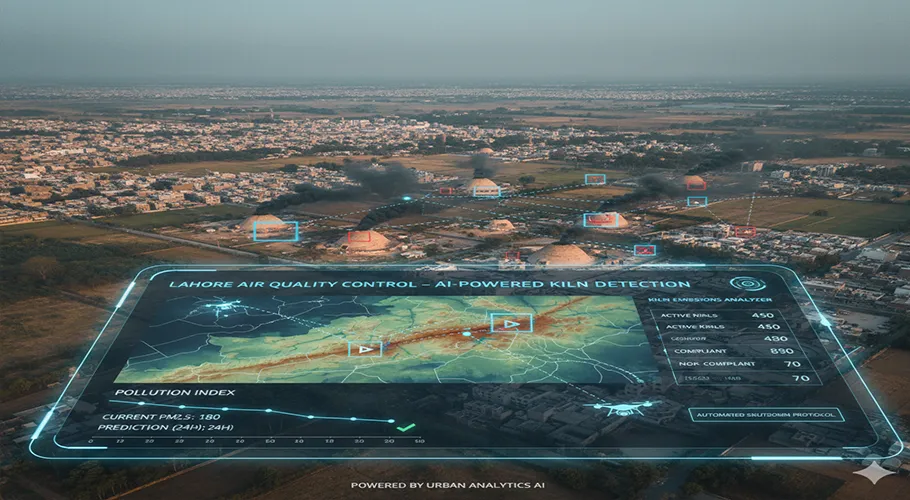
Lahore uses digital methods to control brick kiln pollution through AI-powered detection of kilns, a system of digitizing kilns with unique identity cards and geolocation tags, and real-time monitoring.
Digital tools for pollution control
Researchers from Lahore University of Management Sciences (LUMS) and the University of Oxford developed a scalable AI model that analyzes satellite imagery to pinpoint brick kilns automatically.
It uses a two-stage process: first, low-resolution Sentinel-2 images filter potential sites based on spectral signatures (e.g., burn scars, vegetation absence, and built-up features).
Then, high-resolution imagery validates and geolocates them with deep learning, reducing false positives and processing data 21 times faster than prior methods down from days to just 4 days for the entire “Brick Kiln Belt” spanning South Asia.
This has mapped over 11,000 kilns across Pakistan’s IGP region, identifying unregistered ones for targeted enforcement.
In Punjab, it aids EPA in detecting illegal operations during high-pollution episodes, like winter smogs, and supports emission inventories for better air quality modeling.
These digital tools assist in identifying unregulated kilns, tracking operations, and enforcing compliance with cleaner technologies like zigzag kilns, which reduce emissions significantly.
AI-powered detection
An AI model that can automatically detect and map brick kilns from aerial images up to 21 times faster than previous methods.
This helps identify illegal or unregulated kilns quickly and accurately.
GIS-based mapping and e-registration
The Environmental Protection Department (EPD) Punjab has implemented e-mapping and issued unique identity cards with geolocation tags for each brick kiln.
This digital registry allows for real-time monitoring and regulatory oversight, increasing transparency and accountability.
Real-time monitoring
The digital system enables the monitoring of kiln operations and environmental compliance in real-time, allowing authorities to respond to violations more effectively.