

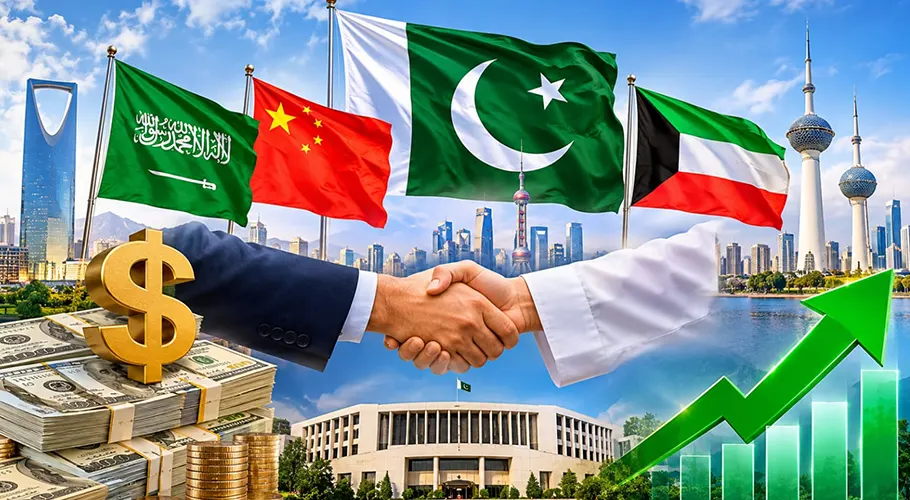
ISLAMABAD: Pakistan is expected to receive significant relief from its external financing pressures after Saudi Arabia agreed to extend a $3 billion loan, while China and Kuwait have also assured Pakistan of rolling over loans worth a combined $4.3 billion.
Federal Minister for Finance Senator Muhammad Aurangzeb confirmed that the arrangement concerning the rollover of Saudi Arabia’s $3 billion loan had been finalised. He also stated that Pakistan does not currently require any additional financial assistance from the Kingdom.
China and Kuwait Assure Pakistan of $4.3 Billion Loan Rollovers
According to sources in the Ministry of Finance, China has assured Pakistan of rolling over a $4 billion loan, while Kuwait has pledged to extend the repayment period of a $300 million loan.
With these commitments, Pakistan is expected to secure loan rollovers worth a total of $7.3 billion from three friendly countries: Saudi Arabia, China and Kuwait.
These arrangements are expected to ease pressure on Pakistan’s foreign exchange reserves and help the country manage its external financing requirements.
Sources further indicated that China’s $4 billion loan is expected to be rolled over in March 2027, while the loans from all three countries are expected to receive extensions for approximately one year.
Pakistan is scheduled to meet external debt repayment obligations of approximately $21 billion during the current fiscal year. The anticipated rollover of $7.3 billion is expected to provide considerable relief by reducing immediate repayment pressures on the government.
Pakistan Expects $1.21 Billion IMF Tranche in December
In another significant development, Pakistan is also expecting to receive the next financial tranche of approximately $1.21 billion from the International Monetary Fund (IMF) in December this year, according to the finance minister.
The expected IMF disbursement, alongside the proposed loan rollovers from Saudi Arabia, China and Kuwait, could further support Pakistan’s external financing position and help maintain stability in its foreign exchange reserves.