

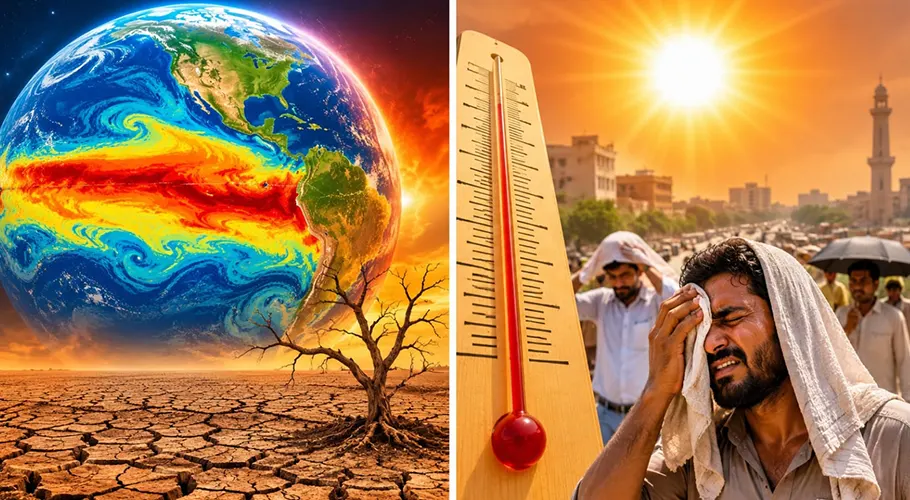
Barcelona: Extreme El Niño events could pose an increasingly serious threat to human health as global temperatures continue to rise due to climate change. A new study has found that exceptionally strong El Niño events may be associated with more than 100,000 additional heat-related deaths worldwide each year.
According to research conducted by scientists in Spain, extreme El Niño years were associated with an estimated annual increase of 107,035 heat-related deaths. However, deaths linked to cold temperatures declined by 112,681 per year during the same periods.
The findings were published in the prestigious scientific journal Nature Medicine. Researchers analysed climate and mortality data from more than 100 countries between 1980 and 2023, including several major El Niño episodes, particularly the severe event of 2015–16.
What Is El Niño?
El Niño is a natural climate phenomenon characterised by unusually warm sea surface temperatures in the equatorial Pacific Ocean. It can disrupt weather patterns across the world, increasing the likelihood of extreme heat, droughts, unusually heavy rainfall, floods and wildfires.
Researchers found that the additional burden of heat-related deaths was particularly severe in tropical countries, especially those with limited financial resources and weaker public health infrastructure.
Natalia Shartova, the study’s lead author, said that although the global increase in heat-related deaths appears to be offset by a decline in cold-related deaths, the overall health burden may be considerably greater in countries with fewer resources.
Potential Impact of the 2026 Super El Niño
Scientists have cautioned that the findings of this study cannot be used to directly predict the number of deaths that may occur during a potential Super El Niño in 2026.
However, a separate report by the University of Chicago’s Climate Impact Lab estimated that El Niño-related conditions could contribute to approximately 451,000 additional deaths worldwide between September 2026 and February 2027.
Experts warn that climate change could make the health consequences of El Niño events increasingly complex. They stress the importance of strengthening healthcare systems, improving preparedness for extreme weather and protecting vulnerable populations to reduce the risk to human lives.