
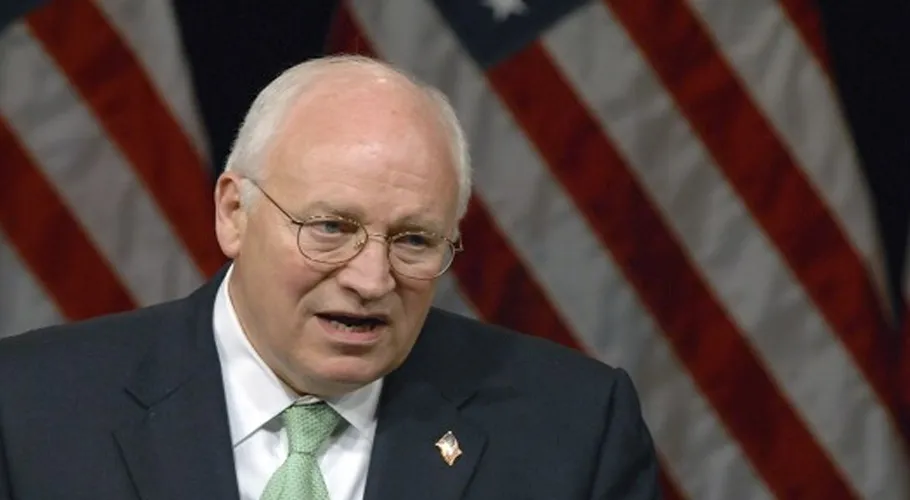
Former U.S. Vice President Dick Cheney, a defining figure in American conservatism and one of the most influential and divisive politicians of his generation, died on November 3, 2025, at his home in Virginia.
He was 84. His family confirmed the news in a statement early Tuesday, attributing his passing to complications from pneumonia, cardiac, and vascular disease.
Breaking: Dick Cheney, who served four Republican presidents and whose role as an architect of the post-9/11 war on terror made him one of the most powerful—and controversial—U.S. vice presidents in history, died. He was 84.
Read more 🔗: https://t.co/gfGRlaTezi pic.twitter.com/cTEGbasN6H
— The Wall Street Journal (@WSJ) November 4, 2025
Cheney was surrounded by his wife of 61 years, Lynne, daughters Liz and Mary, and other loved ones at the time.
He was born on January 30, 1941, in Lincoln, Nebraska. Richard Bruce Cheney rose from humble roots—son of a soil conservationist—to become a Washington insider who served four Republican presidents.
His career spanned serving as White House Chief of Staff under Gerald Ford (1975–1977), where he helped navigate the post-Watergate era.
U.S. Congressman from Wyoming (1979–1989), rising to House minority whip.
Secretary of Defense under George H.W. Bush (1989–1993), overseeing the Gulf War’s swift victory.
Vice President under George W. Bush (2001–2009), where he wielded unprecedented influence, often dubbed the “most powerful VP in history.”
Cheney’s pre-VP life included a brush with the law—a 1963 DUI conviction at age 21—and early health scares, like his first heart attack at 37 in 1978.
He underwent multiple procedures, including a heart transplant in 2012, defying odds with a wry quip: waking each day “thankful for the gift of another.”
Cheney’s legacy is inseparable from the “war on terror.” As VP, he was the intellectual force behind the 2001 Patriot Act, enhanced interrogation techniques (later criticized as torture), and the 2003 Iraq invasion—sold on claims of weapons of mass destruction and al-Qaeda ties that proved unfounded.